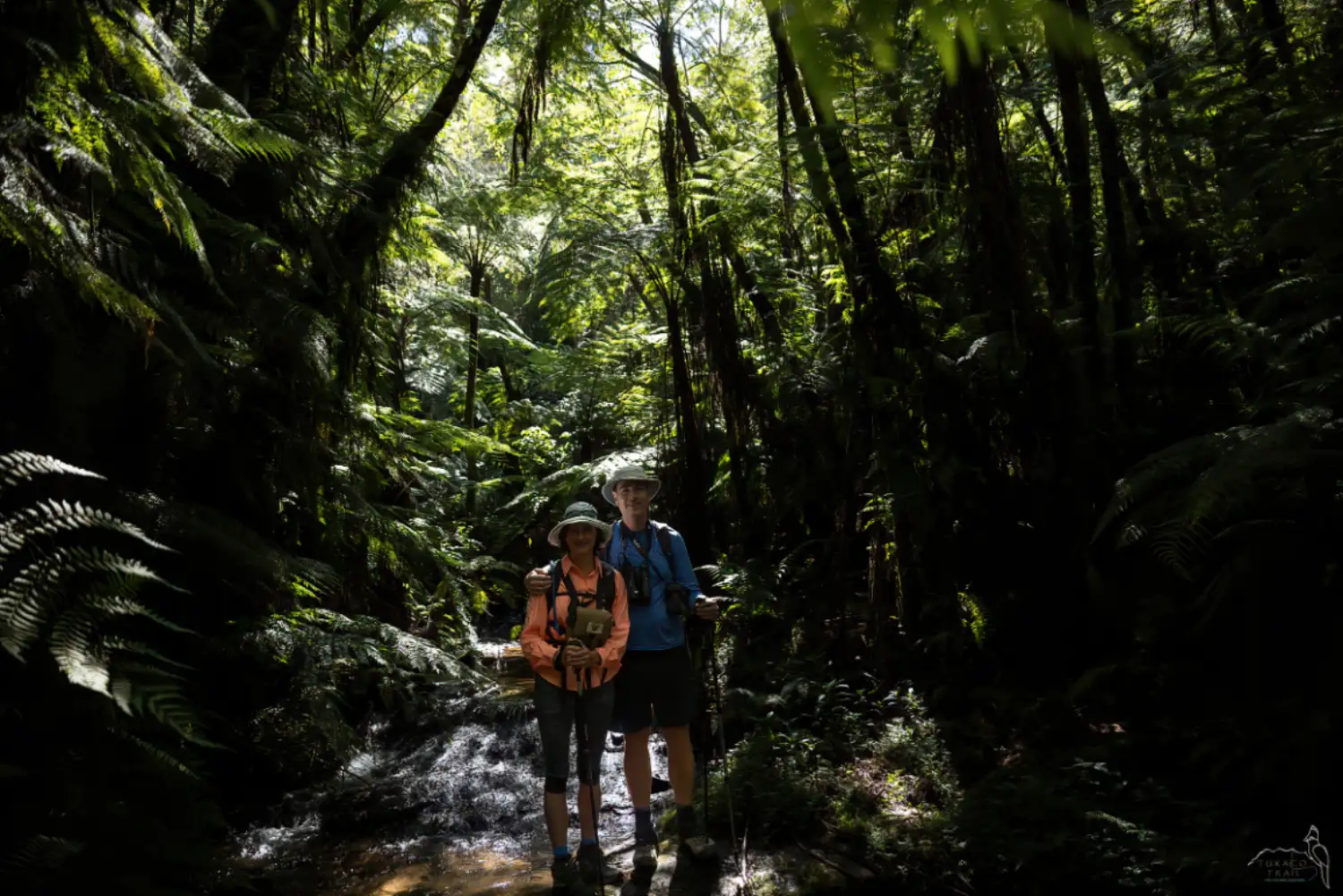
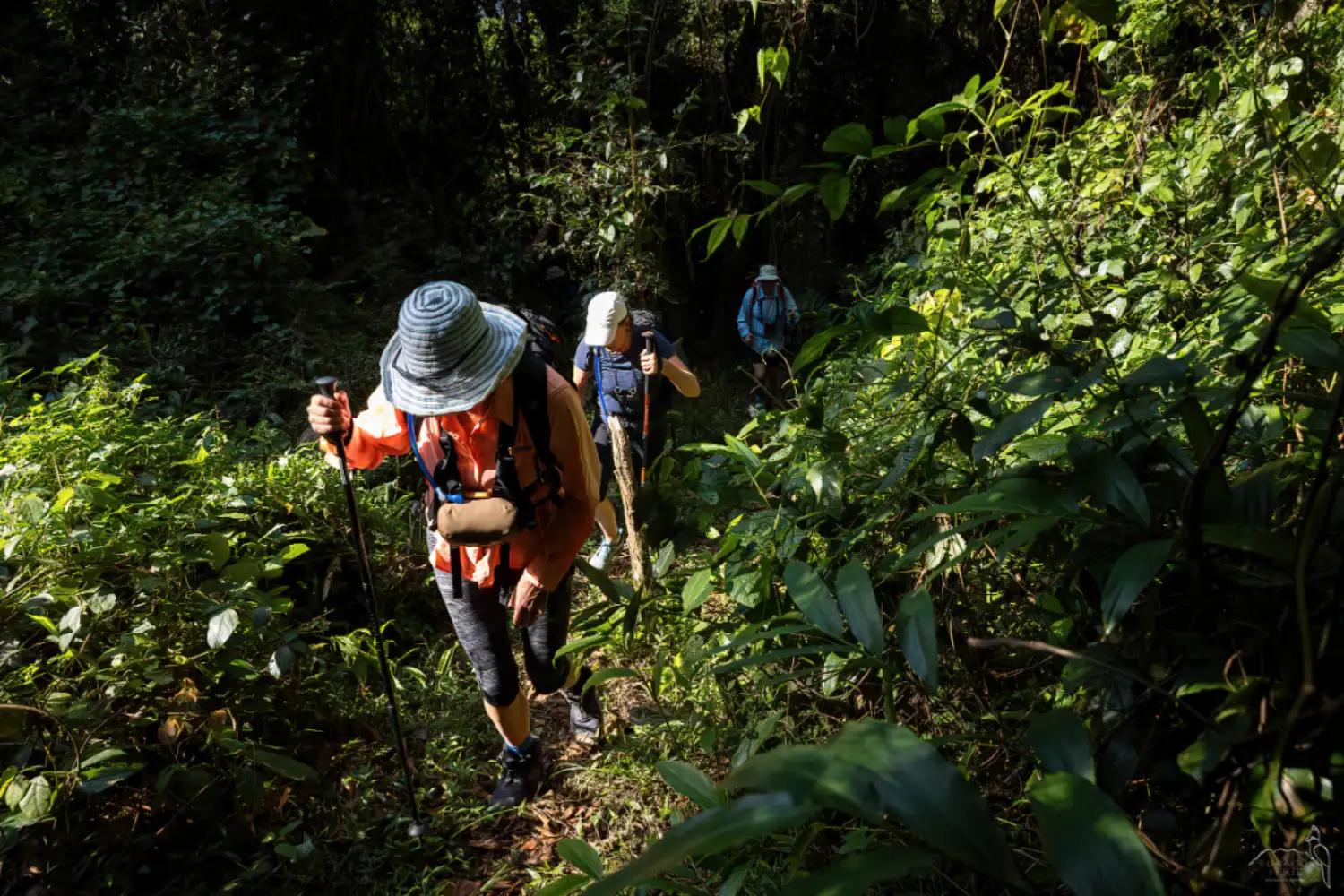
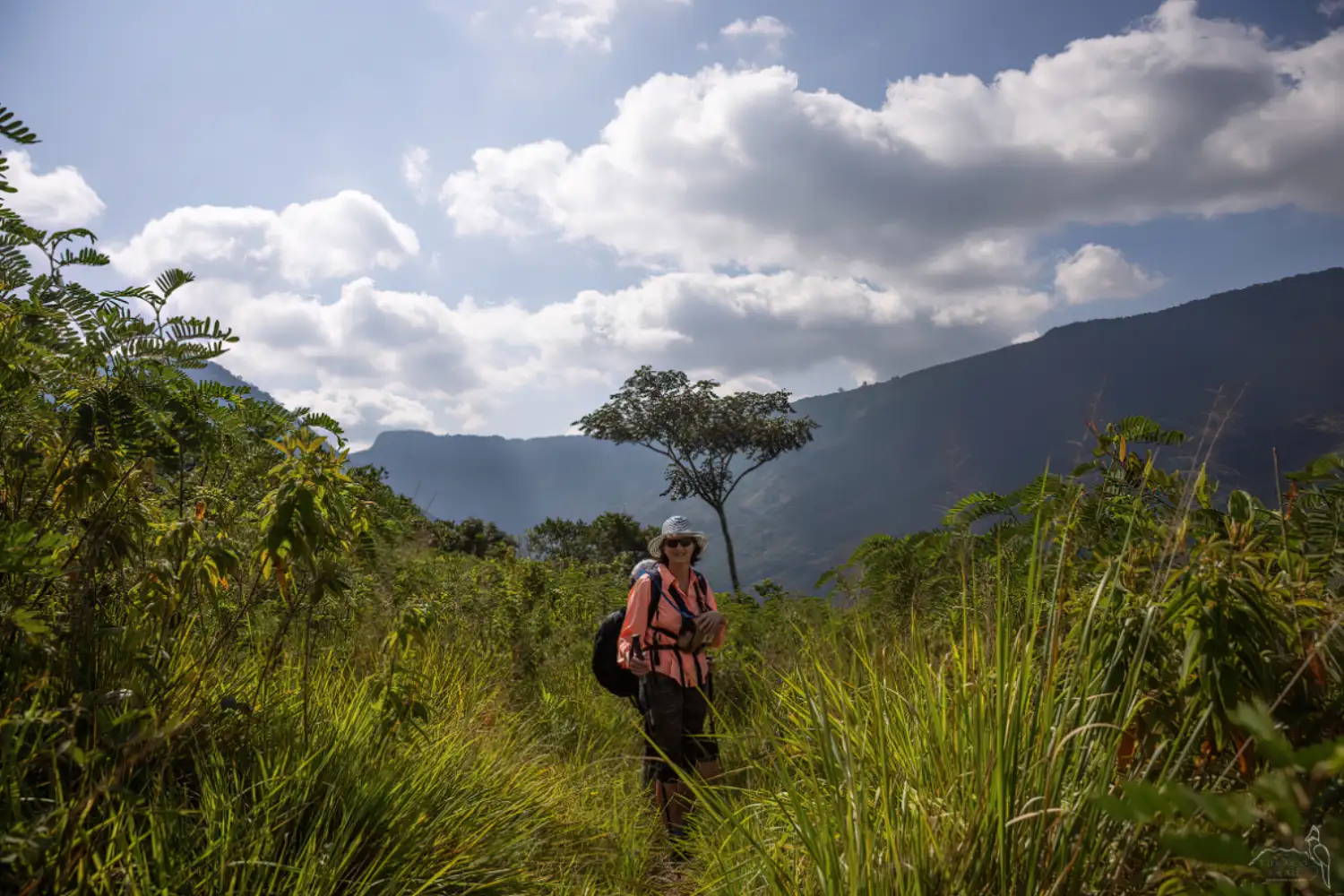
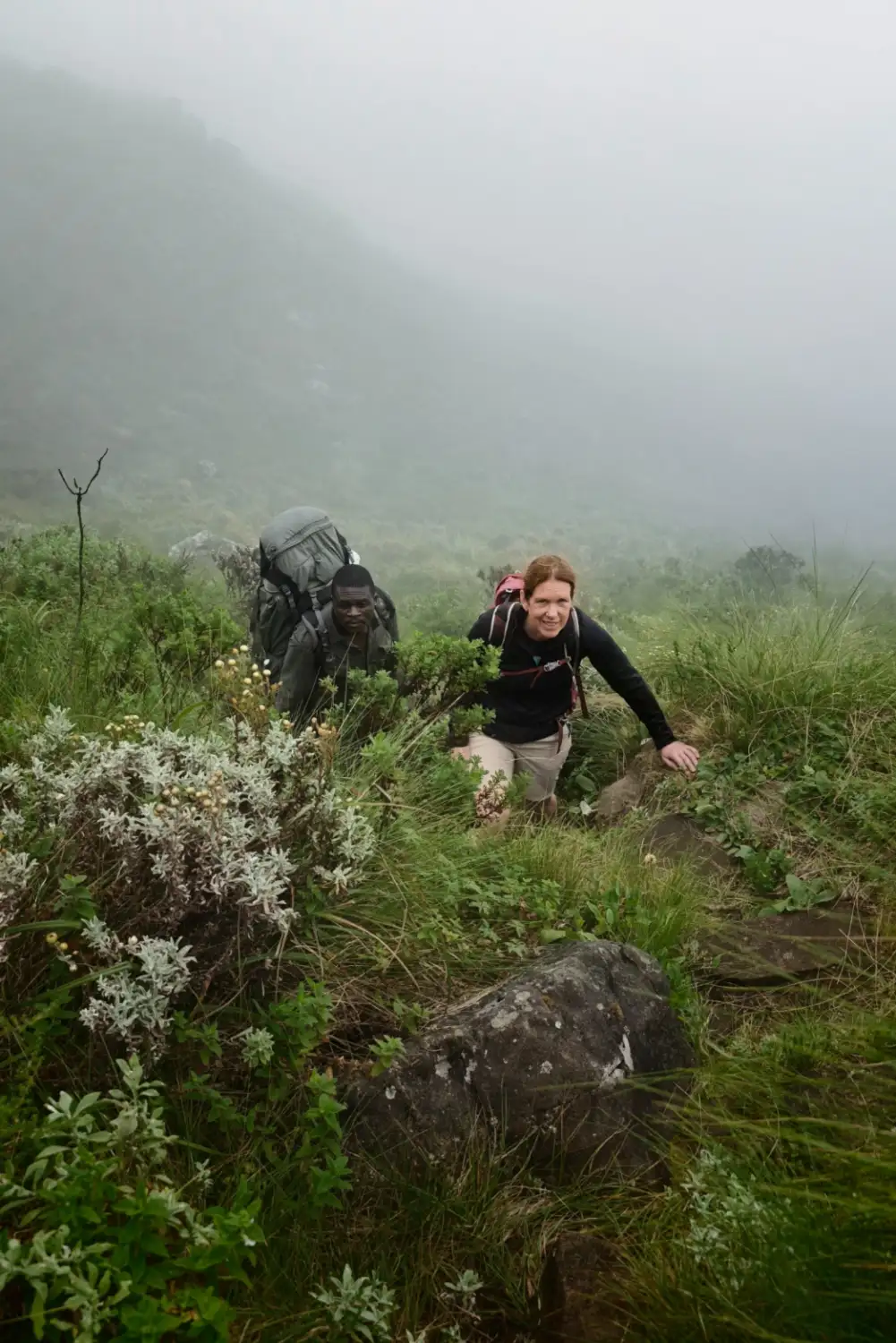
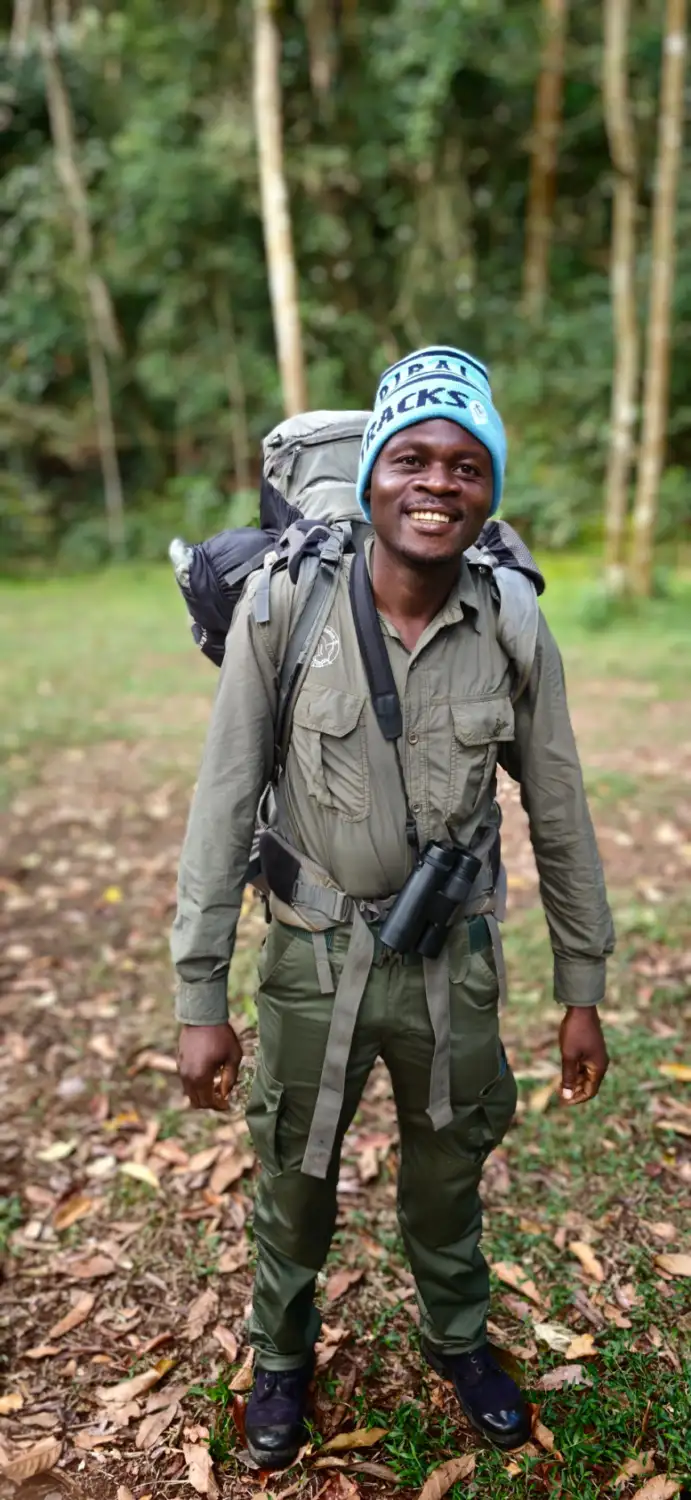
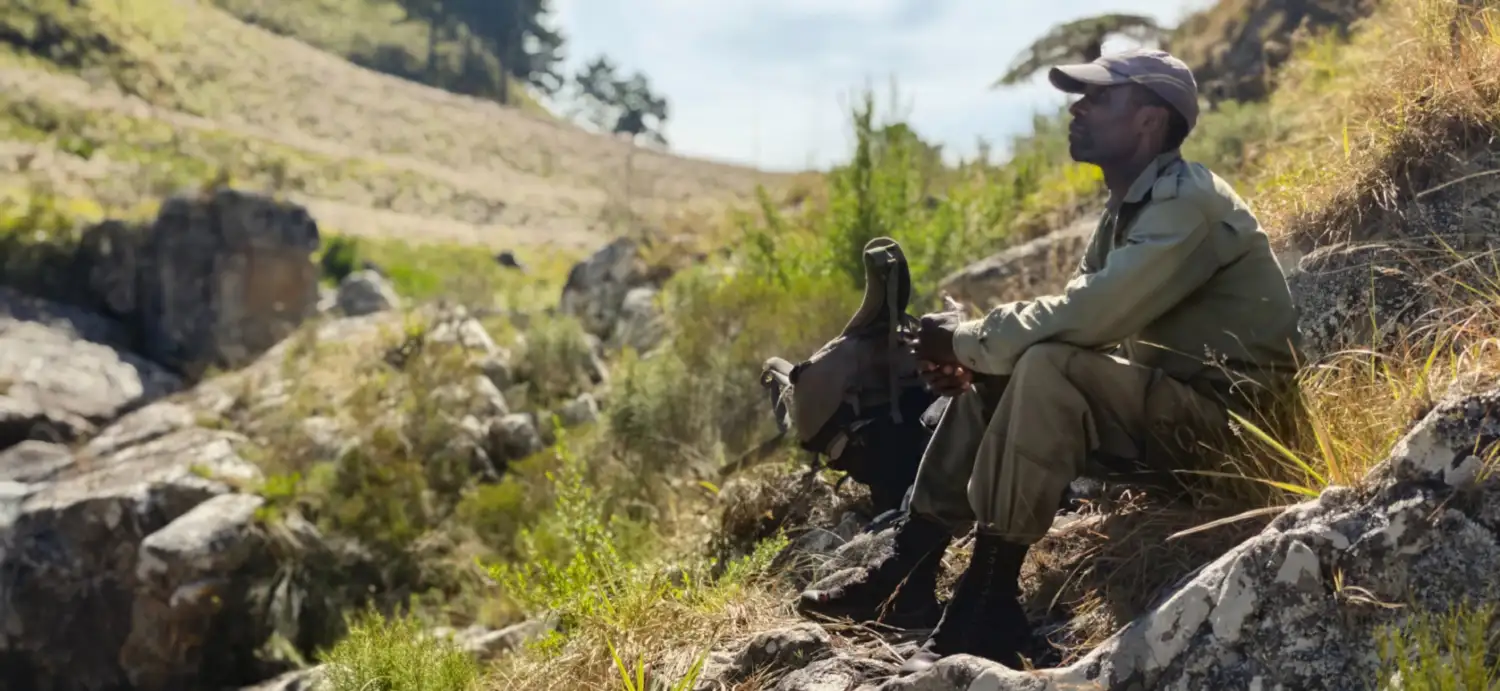
"Climbing Mt Elgon with Tribal Tracks was a fantastic adventure - it was well organised, challenging & remote and a great way to see a beautiful country."
Lori - 40Tude, Mount Elgon 2020
Location
Terrain
Difficulty
Accommodation and Meals
Lodge, Wild Camping, Hotel
Duration
10
Meeting Point
Harare
Annual Leave
6 days
Group Size
Up to 14
Seasons
April - October
Walking Distance
70km approx
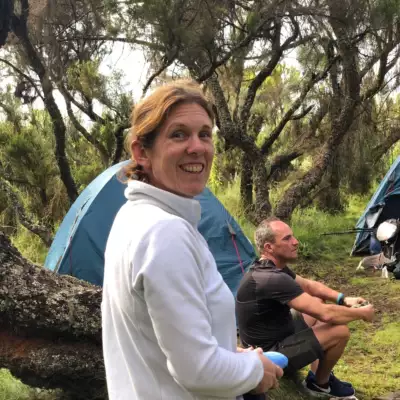
Meet Charlie, a director of, and one of the co-founders of Tribal Tracks.
A real, challenging and 'wild' adventure
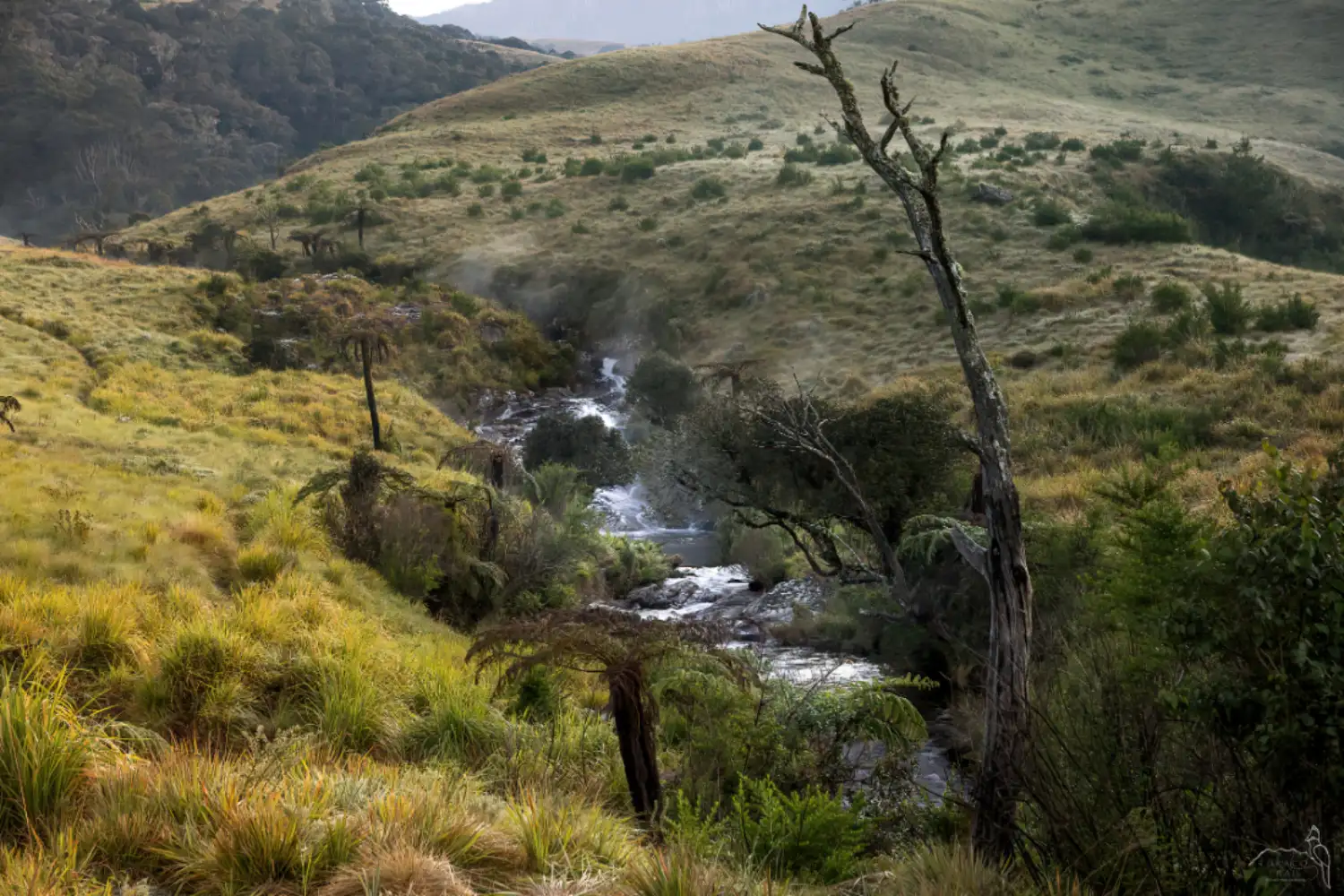
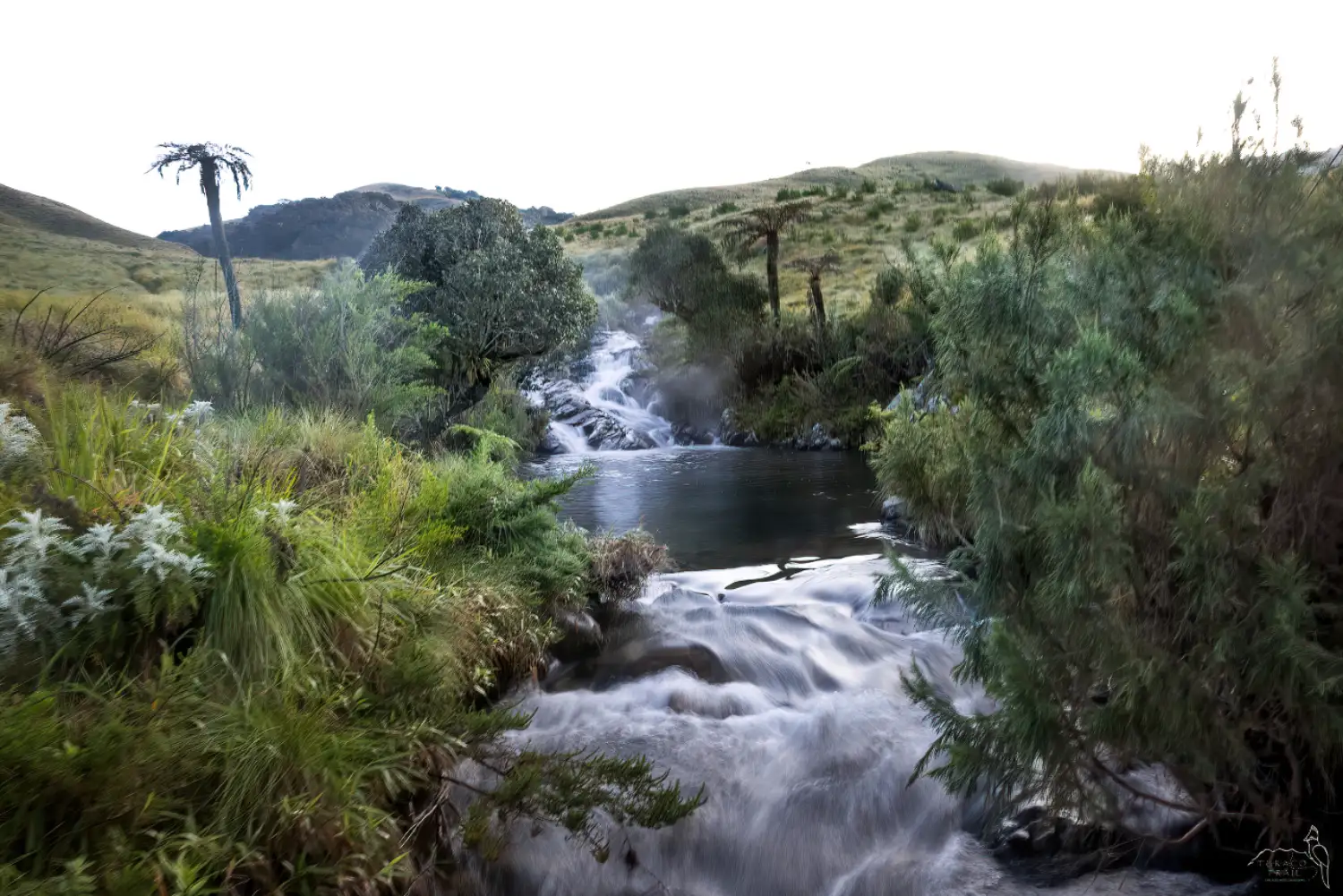
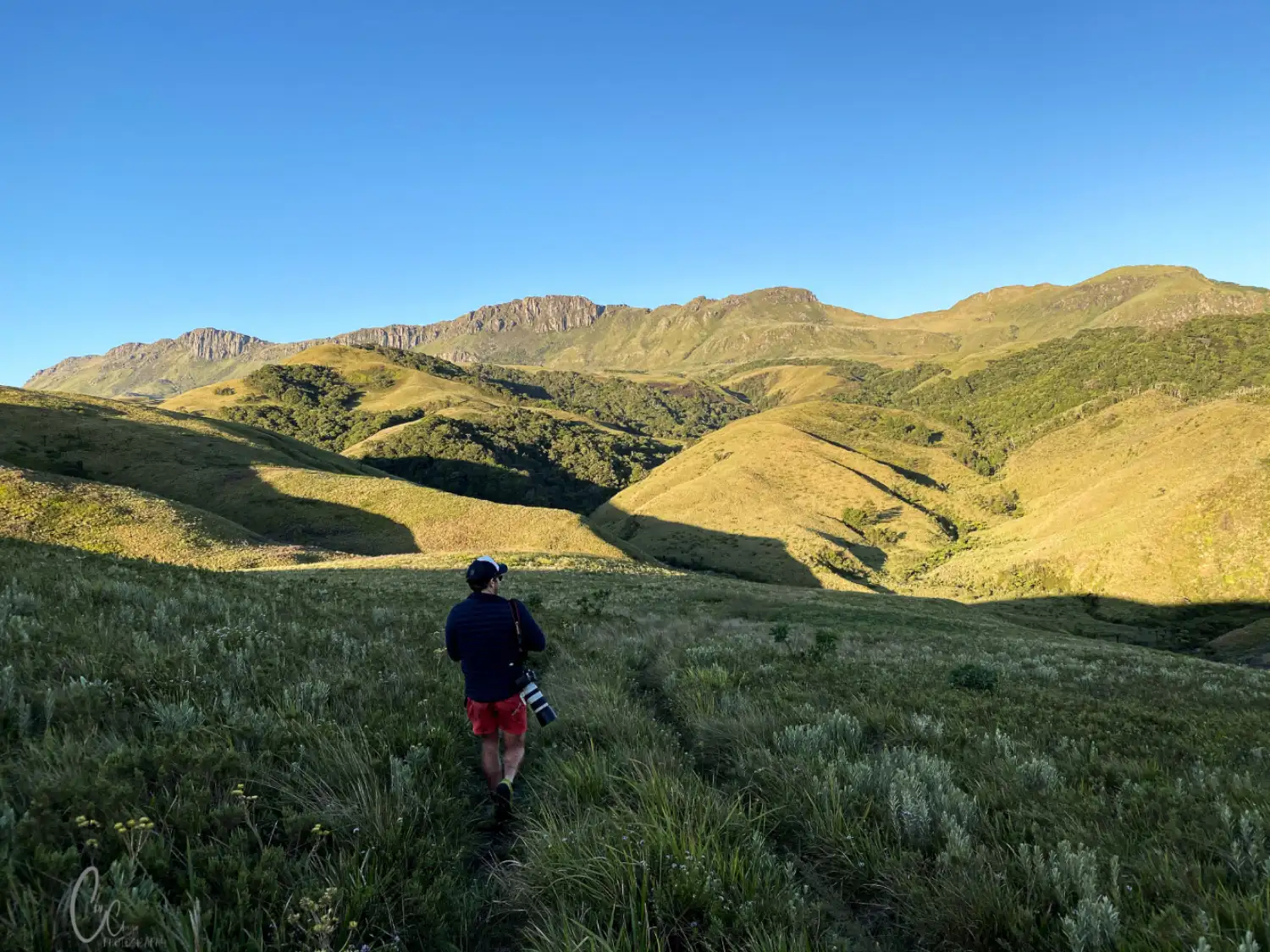
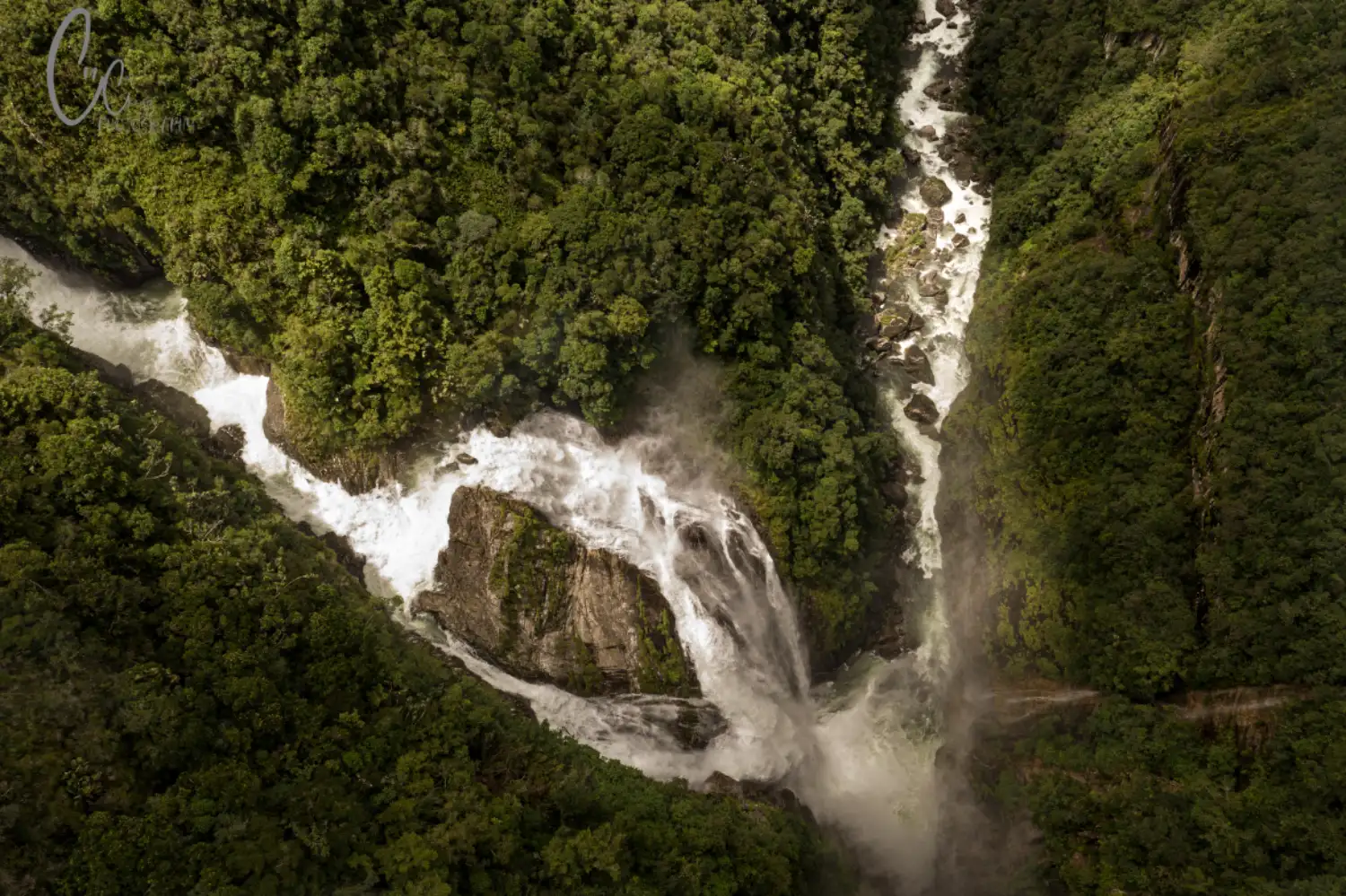
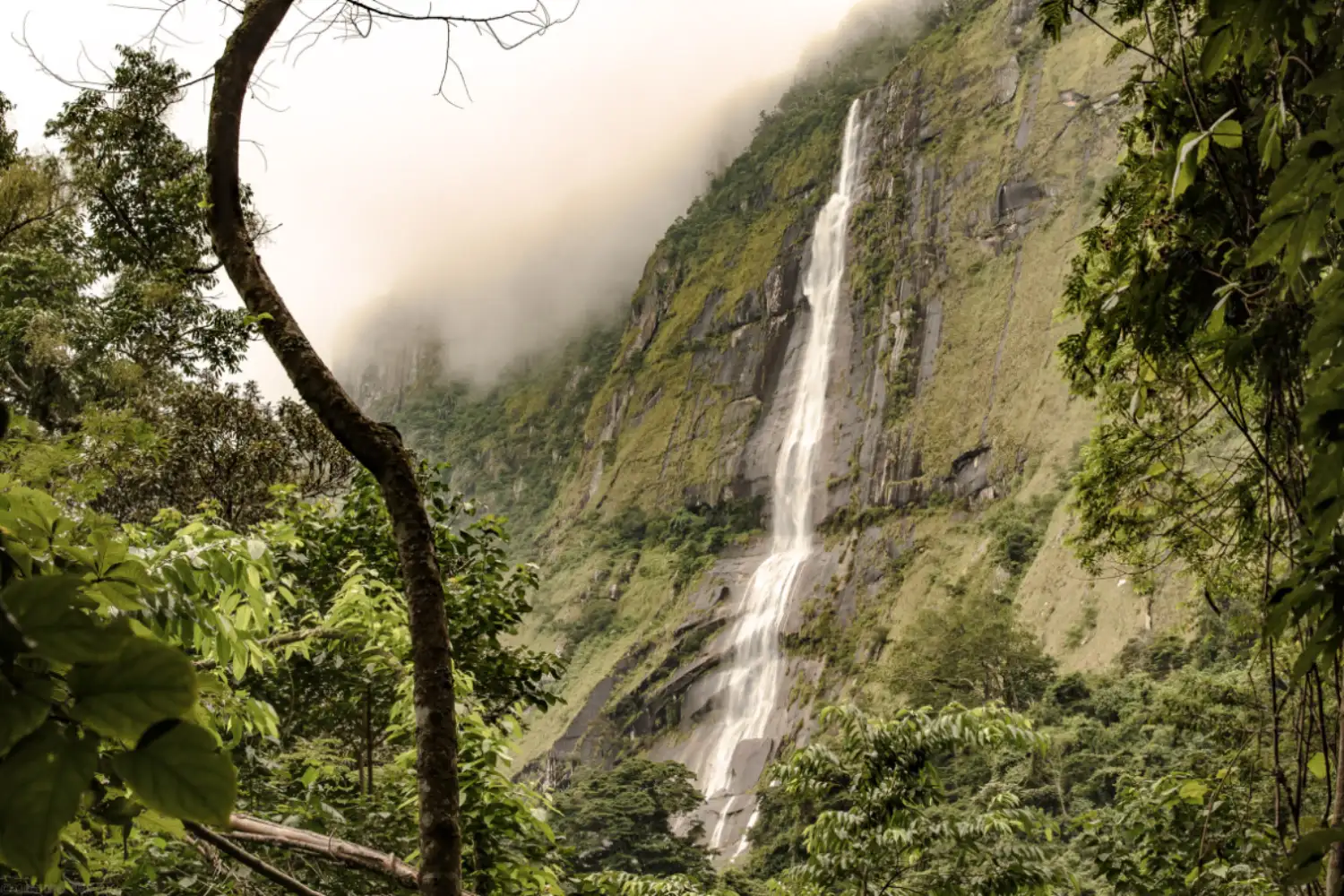
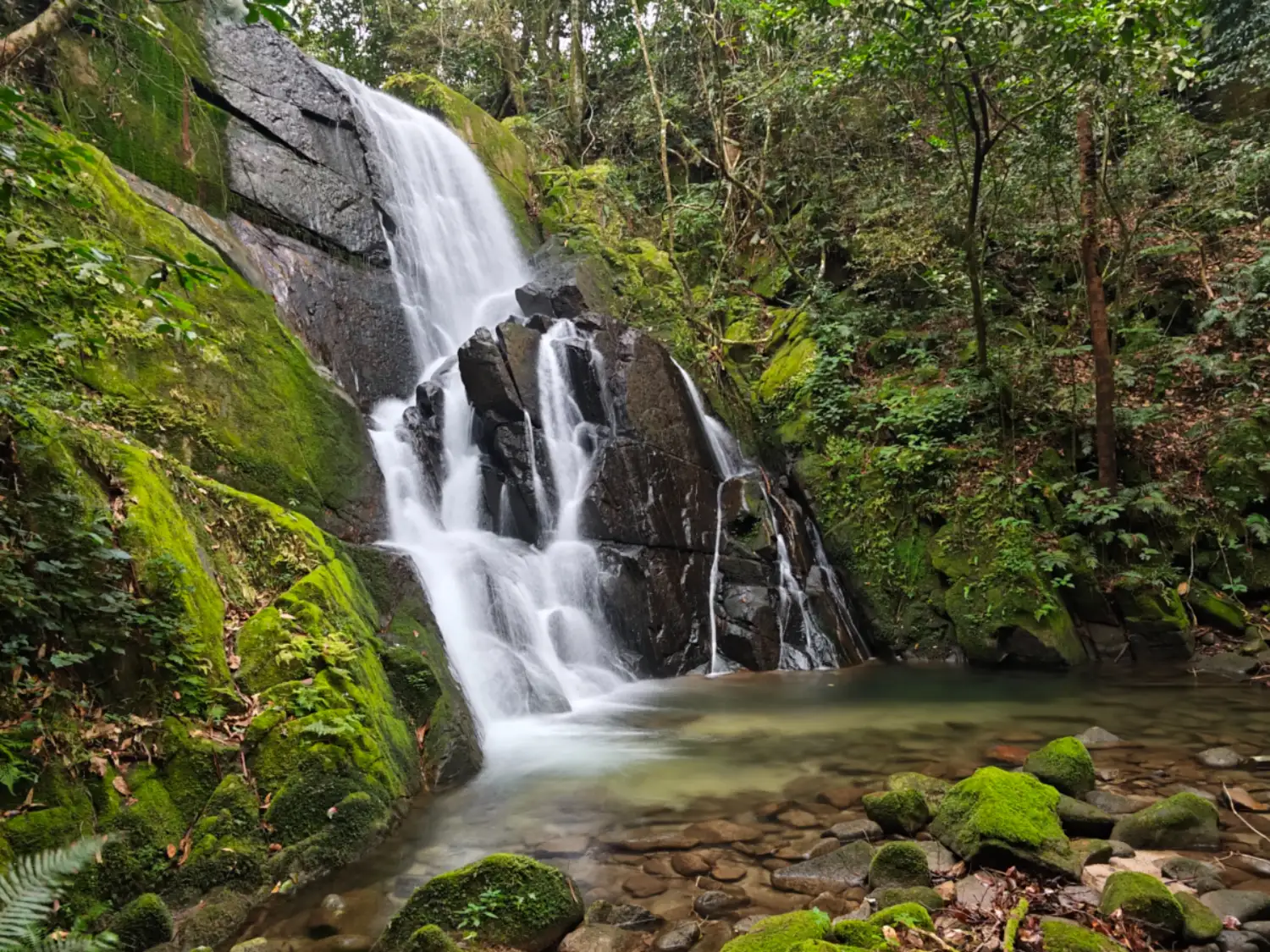
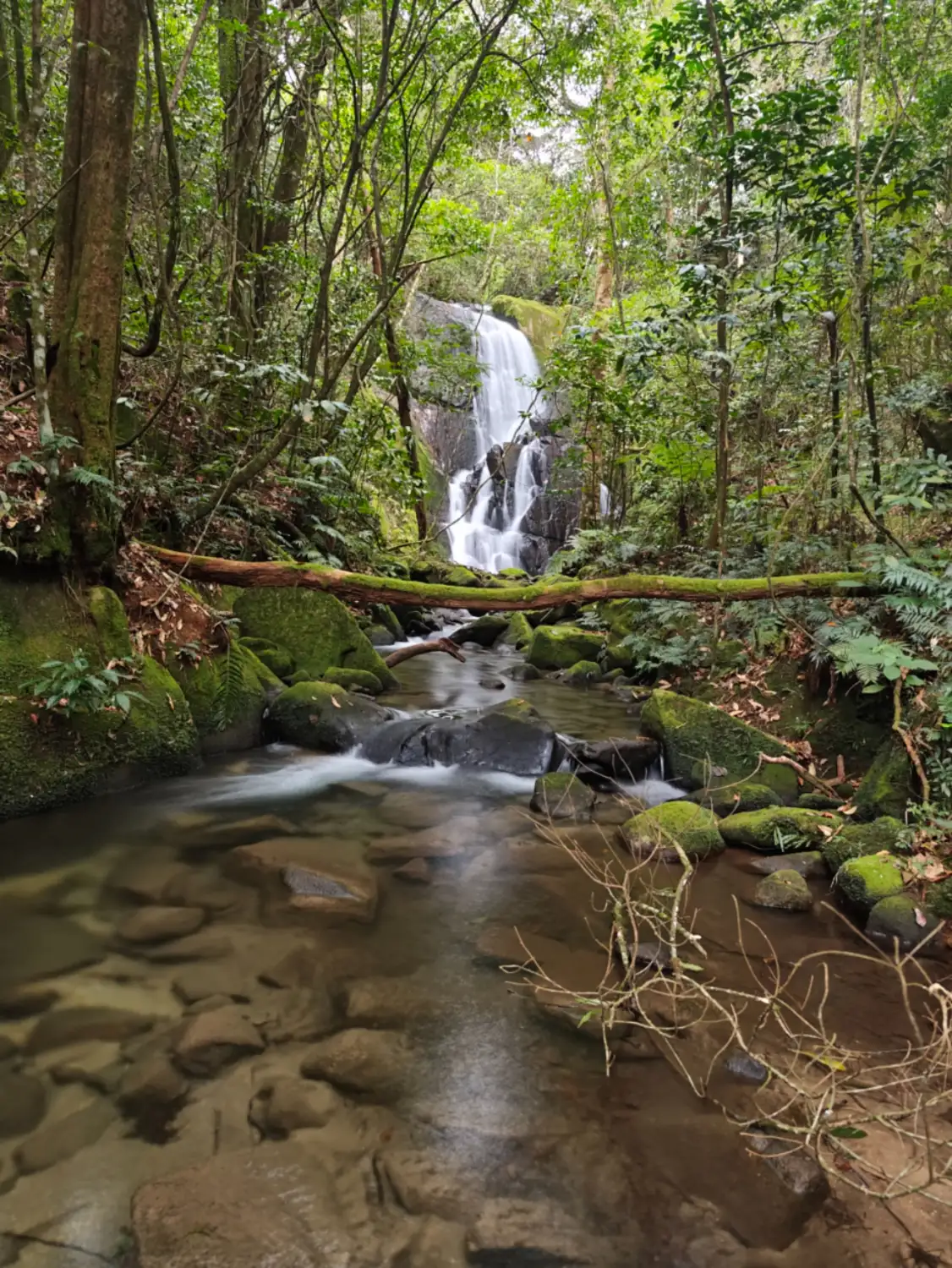
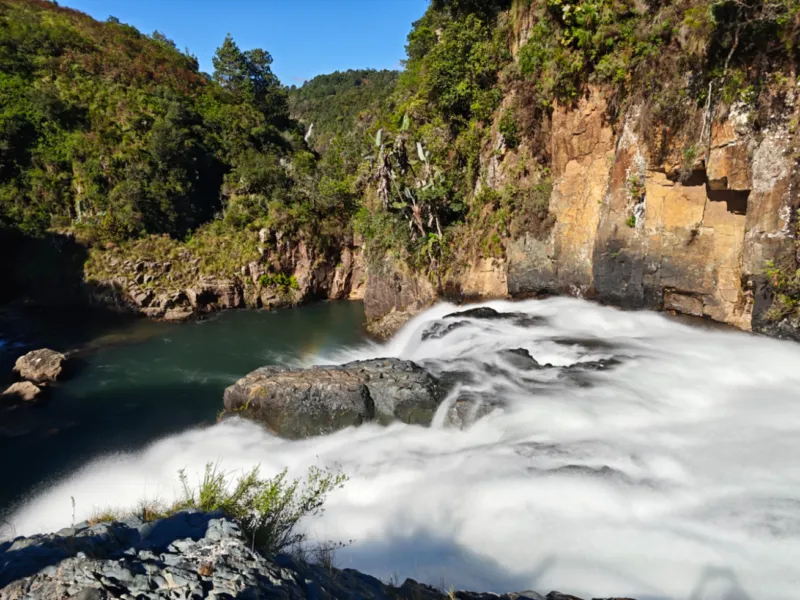
Huge variations in terrain and scenery - thundering waterfalls, afro-montane mystical forests, wide open grasslands, and ridgelines
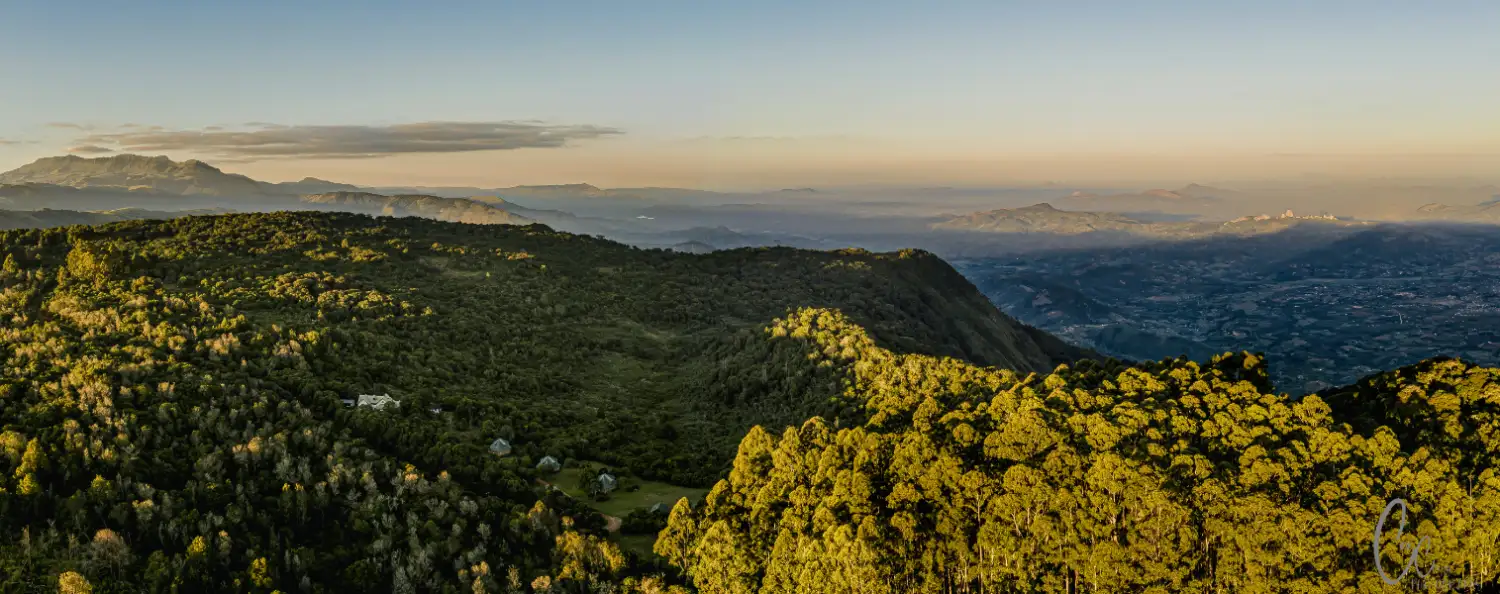
Journey through the remote Mutarazi Falls National Park and Nyanga Eastern Highlands
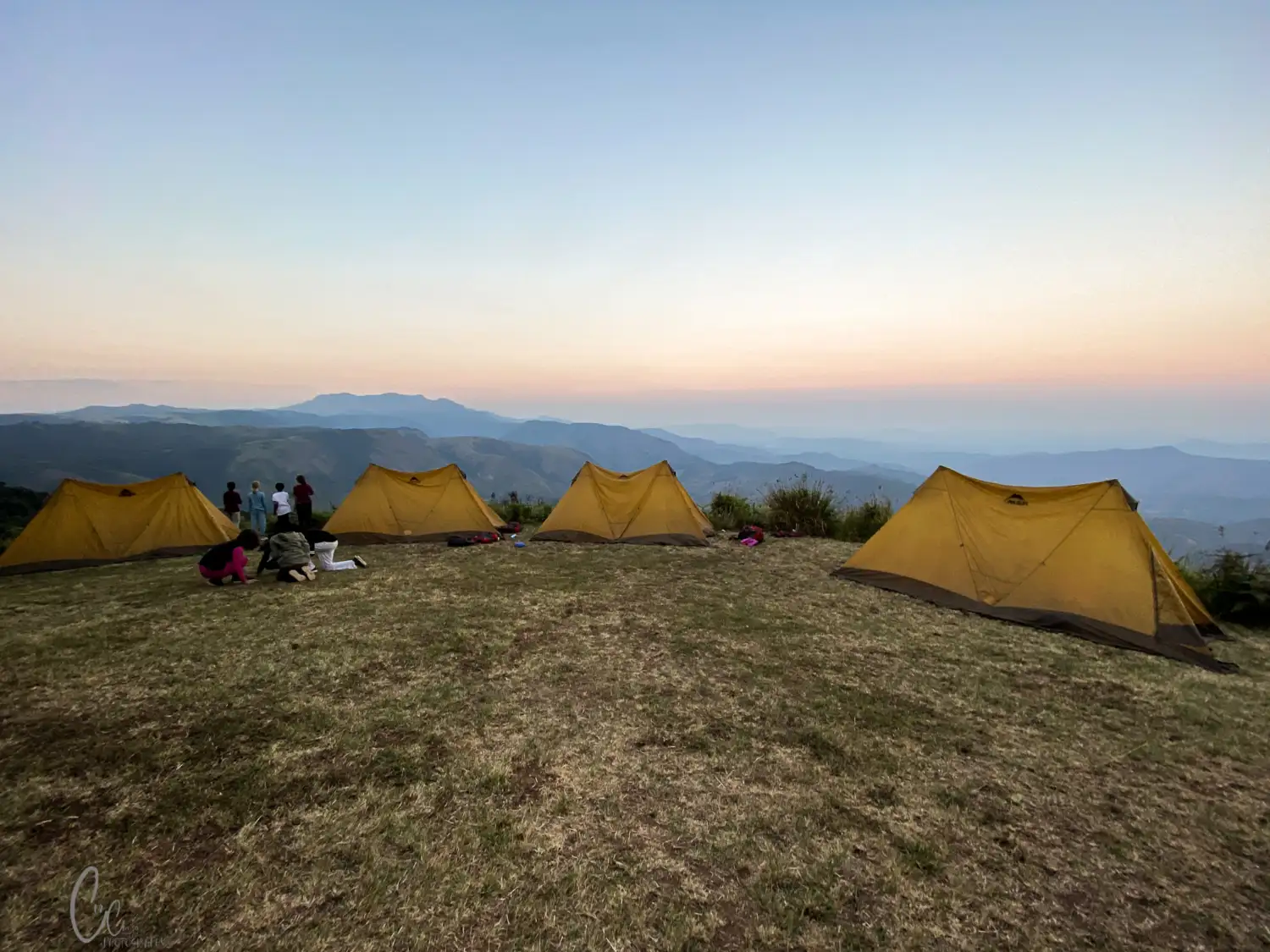
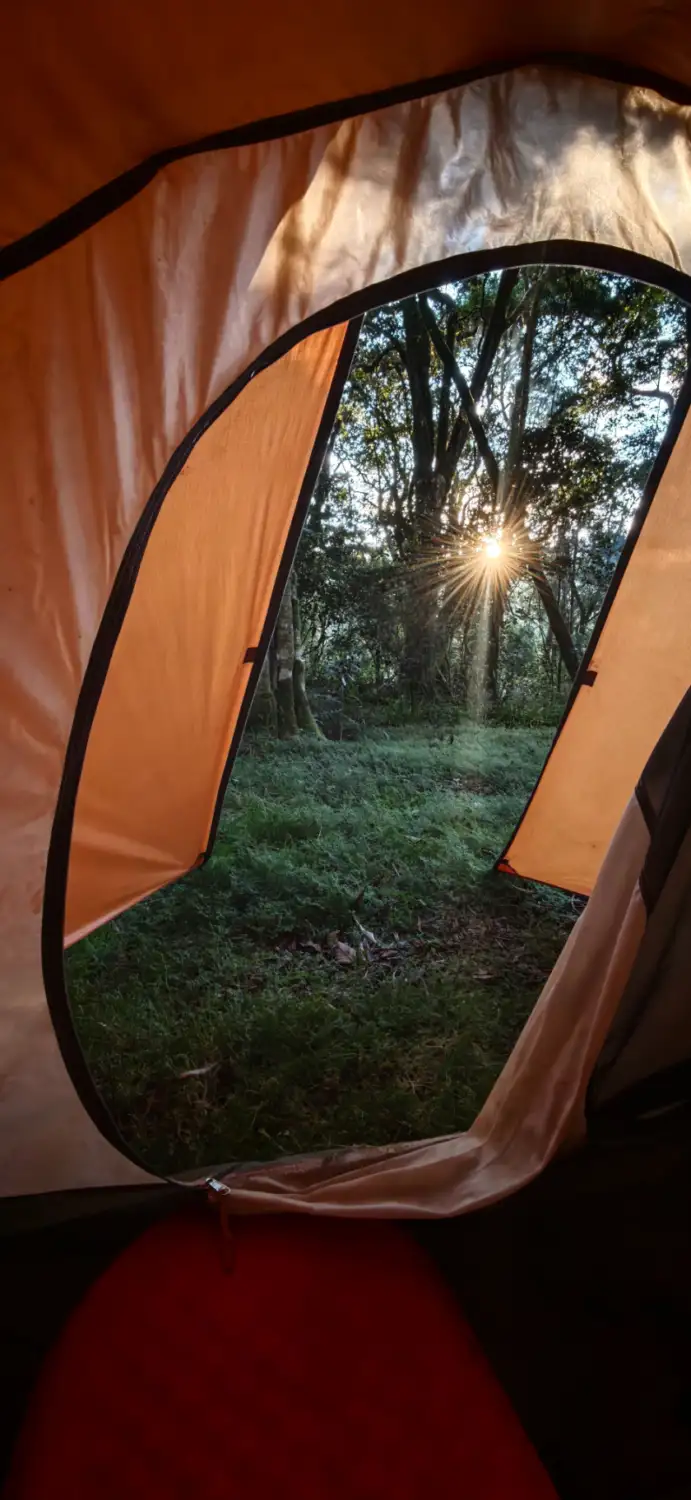
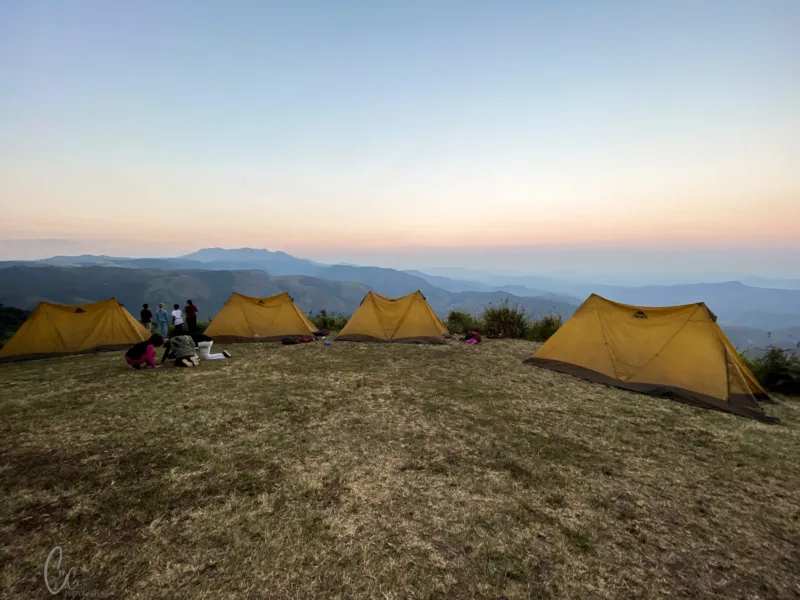
Wild camping in stunning locations next to rivers and in forests
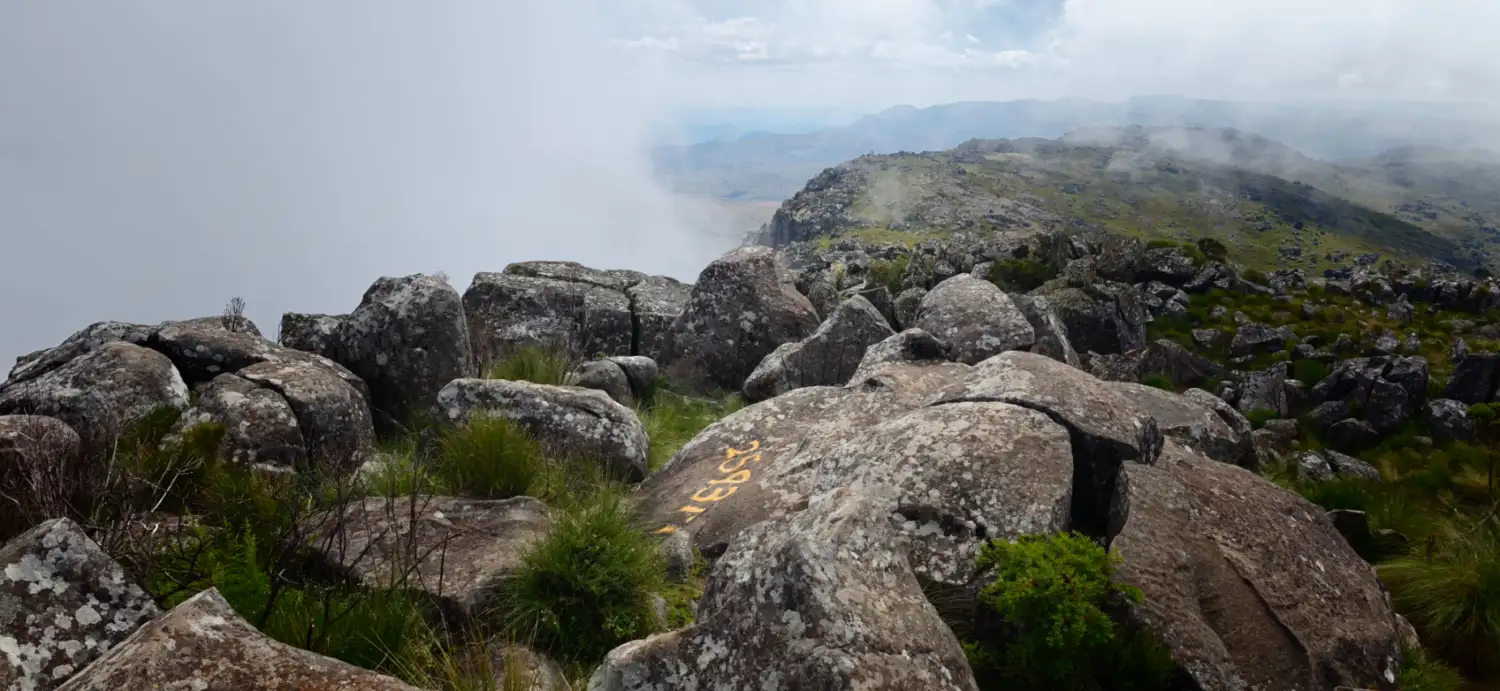
Sweeping views from the summit of Mt Nyangani, the highest and most mystical mountain in Zimbabwe
Cool off in crystal clear waters
All the info you need
Trip Details
This is one of Tribal Tracks’ most challenging adventures. While your journey begins and ends in the comfort of carefully selected hotels, the trek itself is a genuine wilderness expedition. For five unforgettable days, you’ll journey through one of Africa’s most remote and untouched mountain landscapes. Wake to birdsong in enchanted forests, bathe in crystal-clear rivers, gather around campfires beneath the stars and drink fresh water from natural mountain springs. Meals are prepared by your support team in the heart
The trail is named after the striking turaco birds often seen gliding through the canopy, their bright colours flashing through the green forest.
Flights - there are no direct flights to Harare. British Airways and Virgin fly via Johannesburg, Ethiopian Airlines via Addis Ababa, Kenya Airways fly via Nairobi.
Please read the notes in the 'General Notes' section for important details about this trip.
Trip Details

Flights are not included in the price of this itinerary, and you will need to source them yourself. You will be met when you arrive in Harare tomorrow.
Accommodation and Meals
NA
Welcome to Zimbabwe
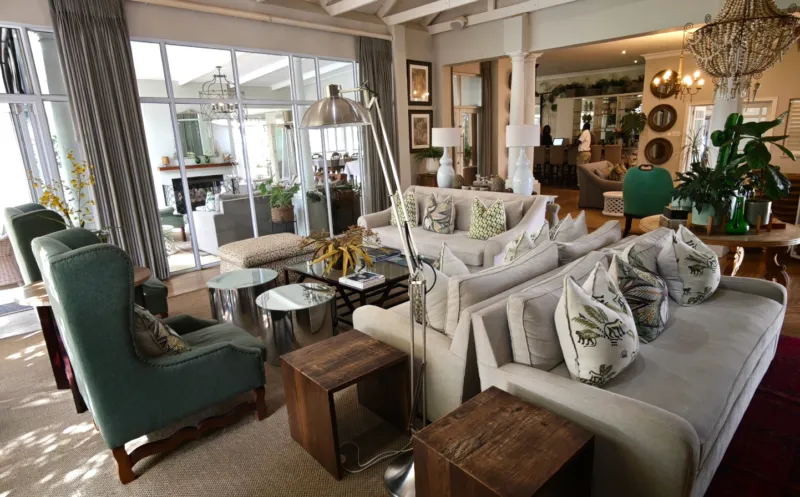
Arrive in Harare (usually mid-late afternoon or early evening via Jo'burg or Nairobi), where you will be met by our friendly ground team and transferred to your boutique hotel accommodation. We'll have time to relax in the pool and gardens before our first meal together and enjoy the comfort of our hotel ahead of the long drive to the highlands tomorrow.
Accommodation and Meals
Overnight boutique hotel, dinner
We head to the mountains
After an early breakfast, we transfer to the highlands. This journey takes around five hours, with a stop at the halfway point (aptly named the Harare-Mutare Halfway House). The majority of the journey is on a smooth highway, but we will transfer to a hardier vehicle for the last 40 minutes or so. We will arrive in time for a late lunch at the Crag 'n' Creek mountain centre restaurant.
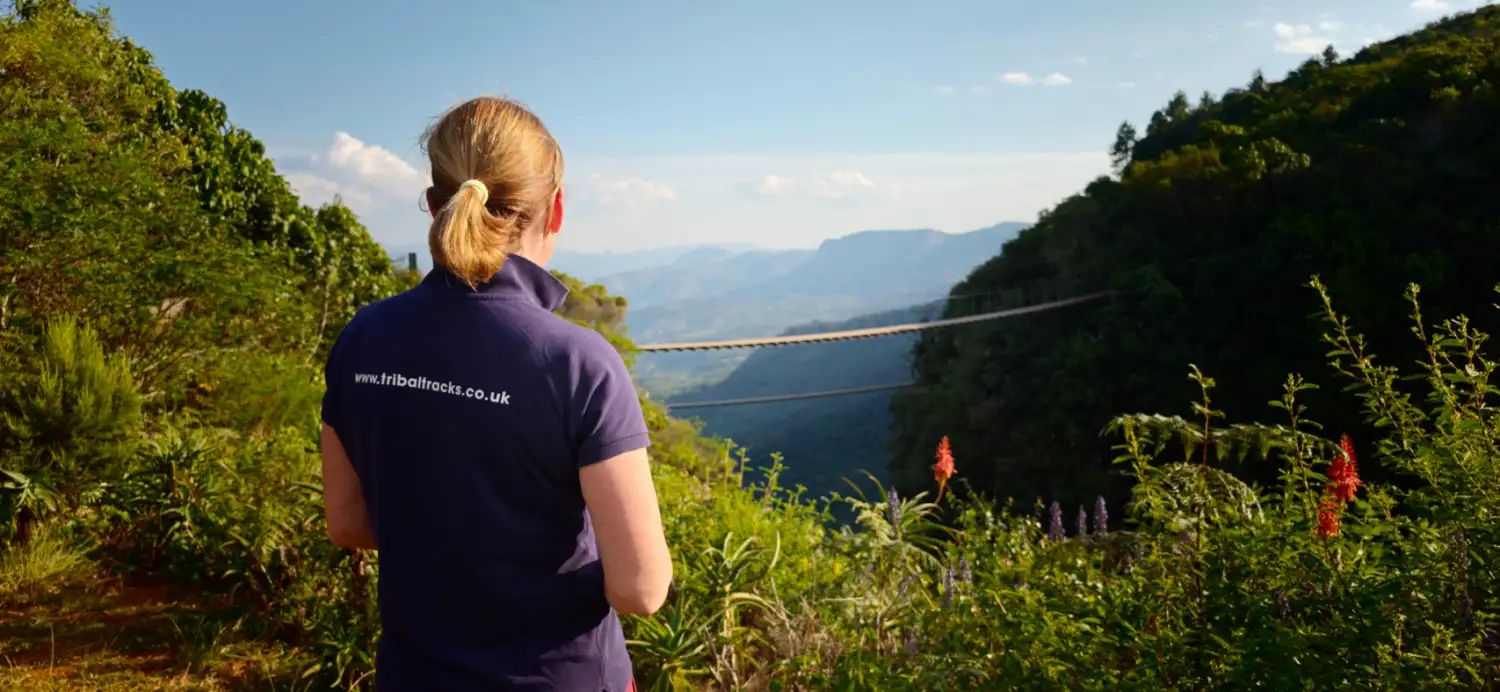
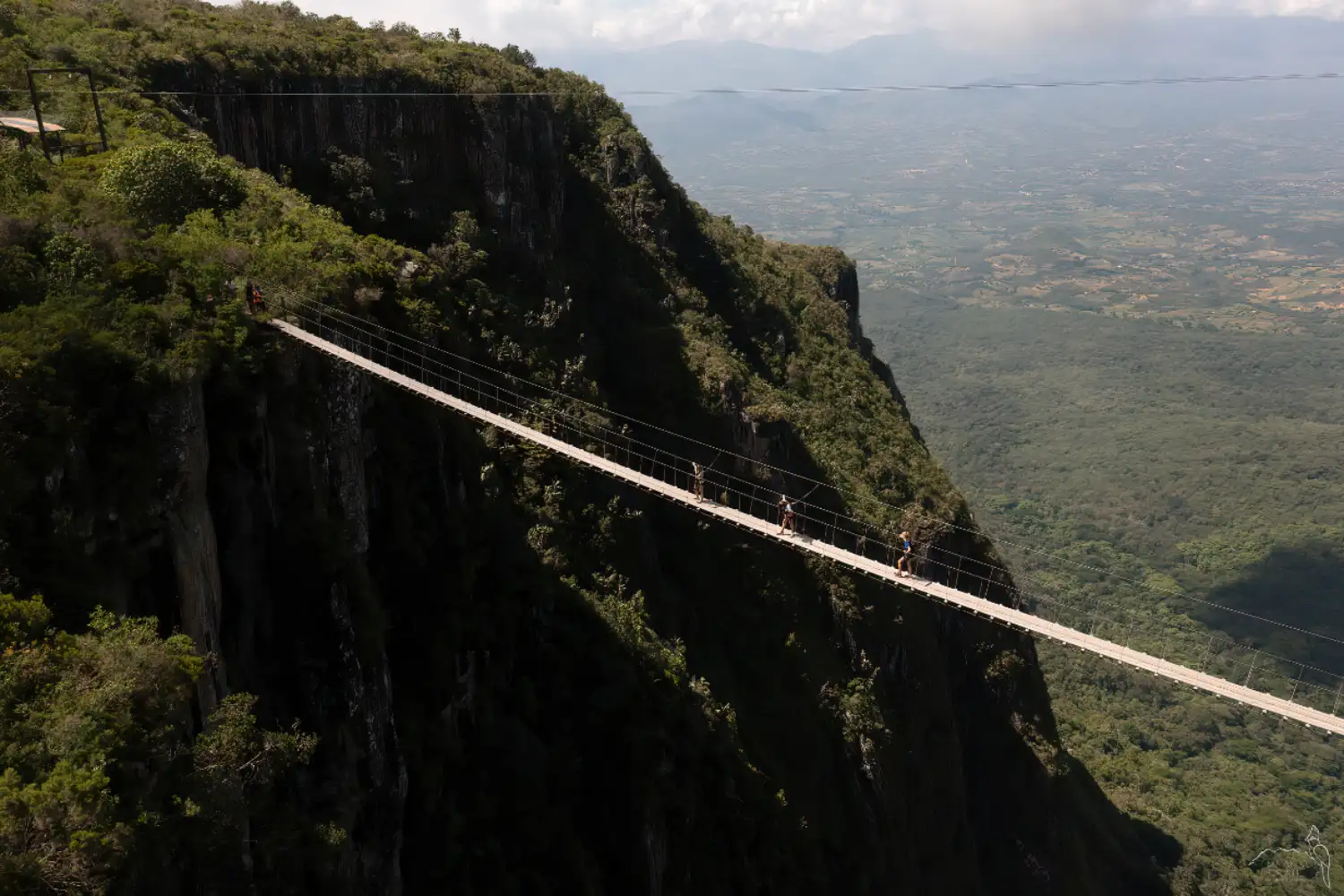
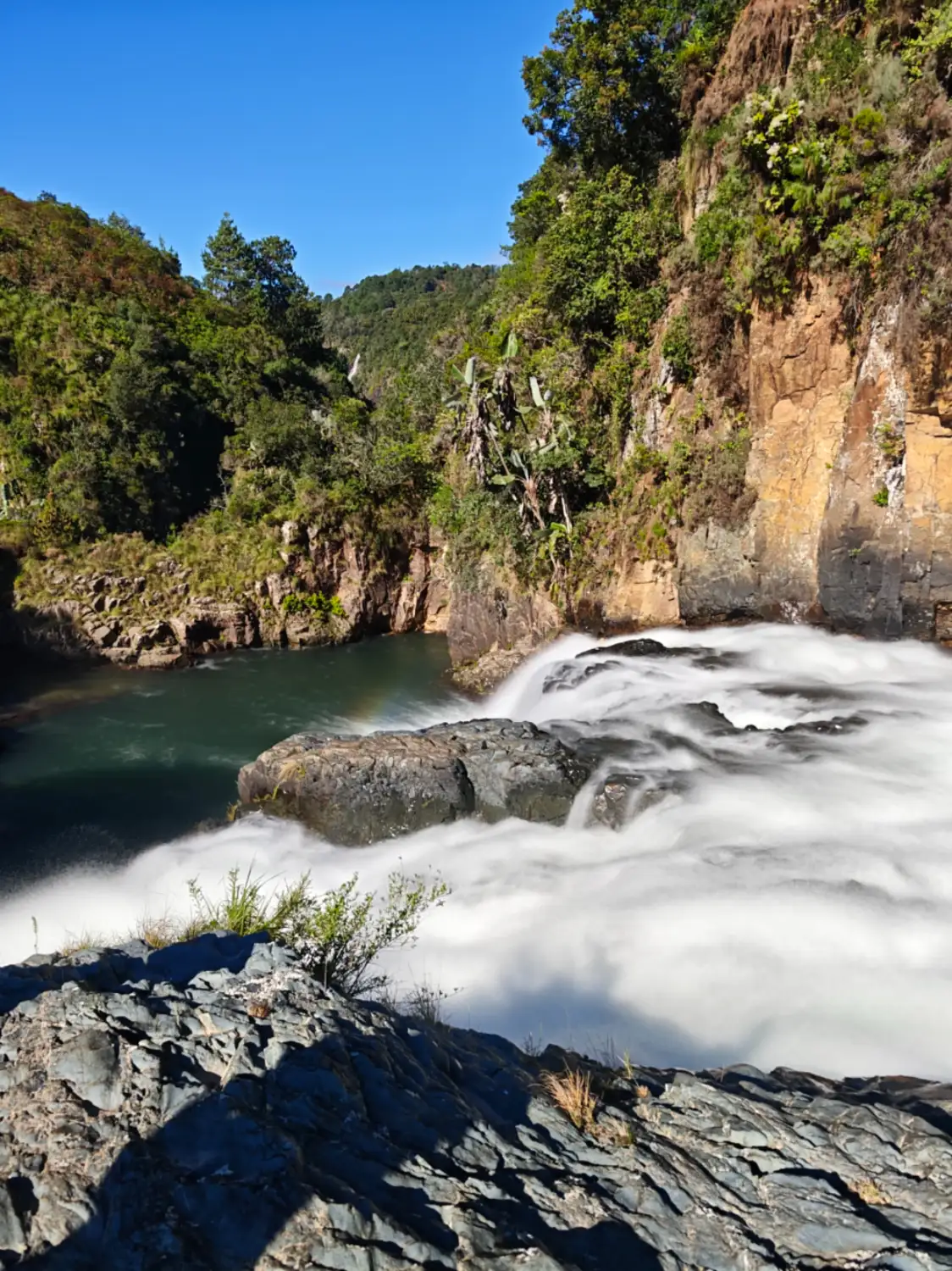
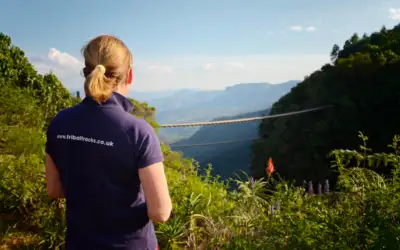
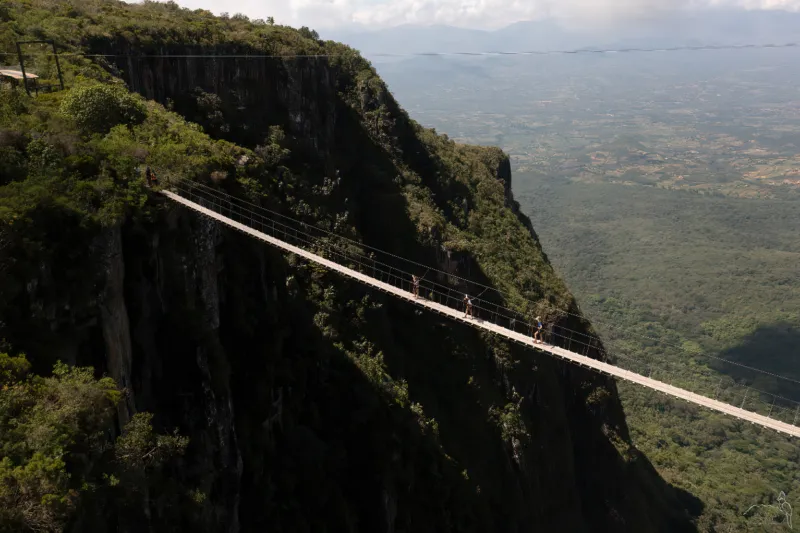
After a short rest, we will shuttle down to the Mutarazi Falls in the Mutarazi National Park. Here we will take in the views of Zimbabwe's highest waterfall (762m) from the Sky Walk itself. The Sky Walk is a pair of knee-shaking suspension bridges situated at the top of the falls. One is around 40m long, and one is 90m. This is an optional activity and not recommended for those that don't like heights.
After we've regained our 'land legs', we return to our accommodation for a thorough trek briefing and make sure we are all prepared for the adventure ahead.
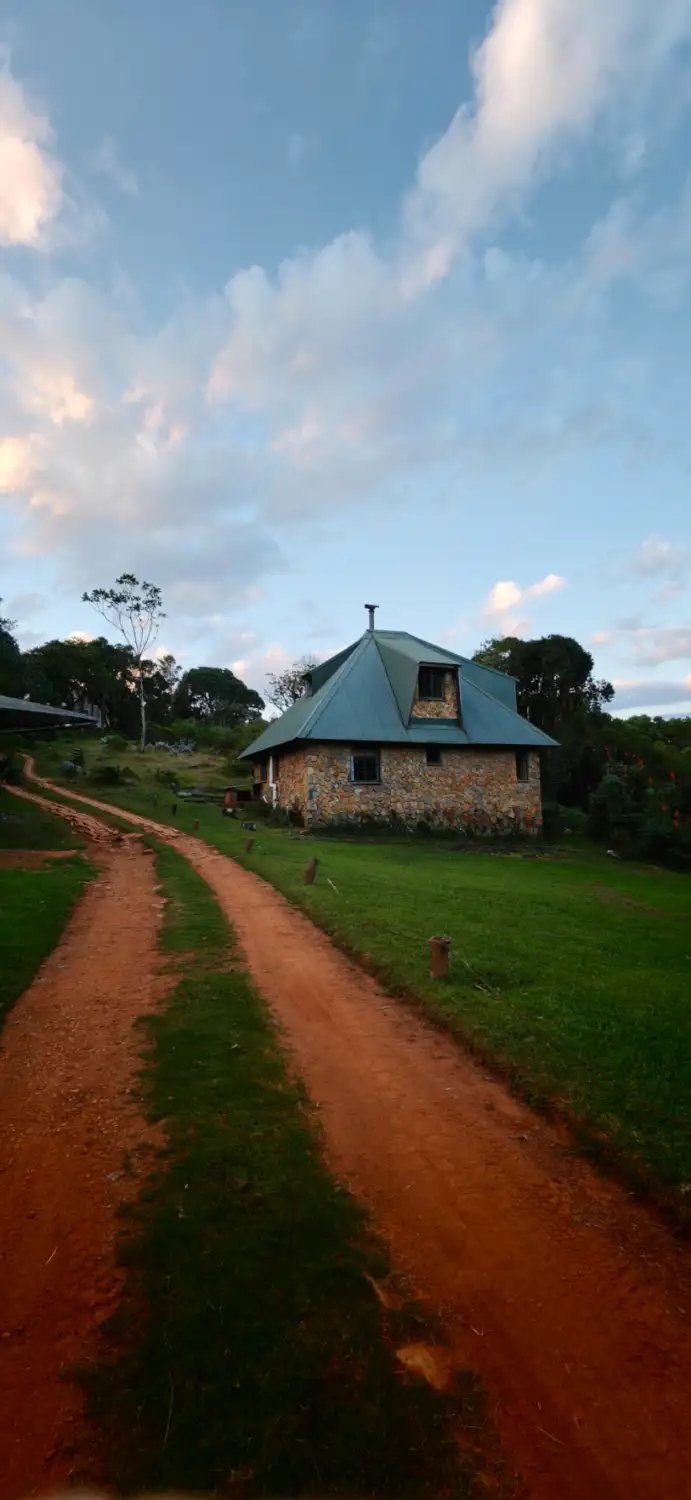
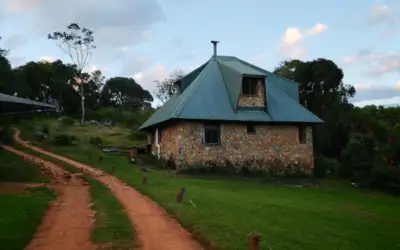
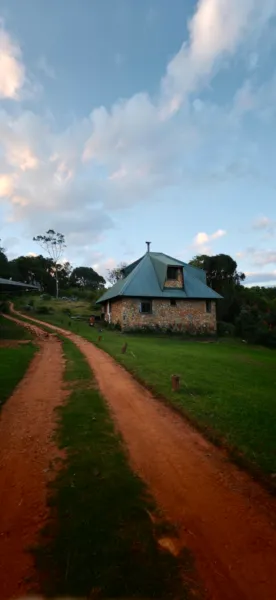
We stay the night in shared rooms split between three basic but charming cottages set in beautiful gardens teeming with wonderful birdlife. Note that some of the beds are bunk beds, which are 'adventurously' close to the ceiling.
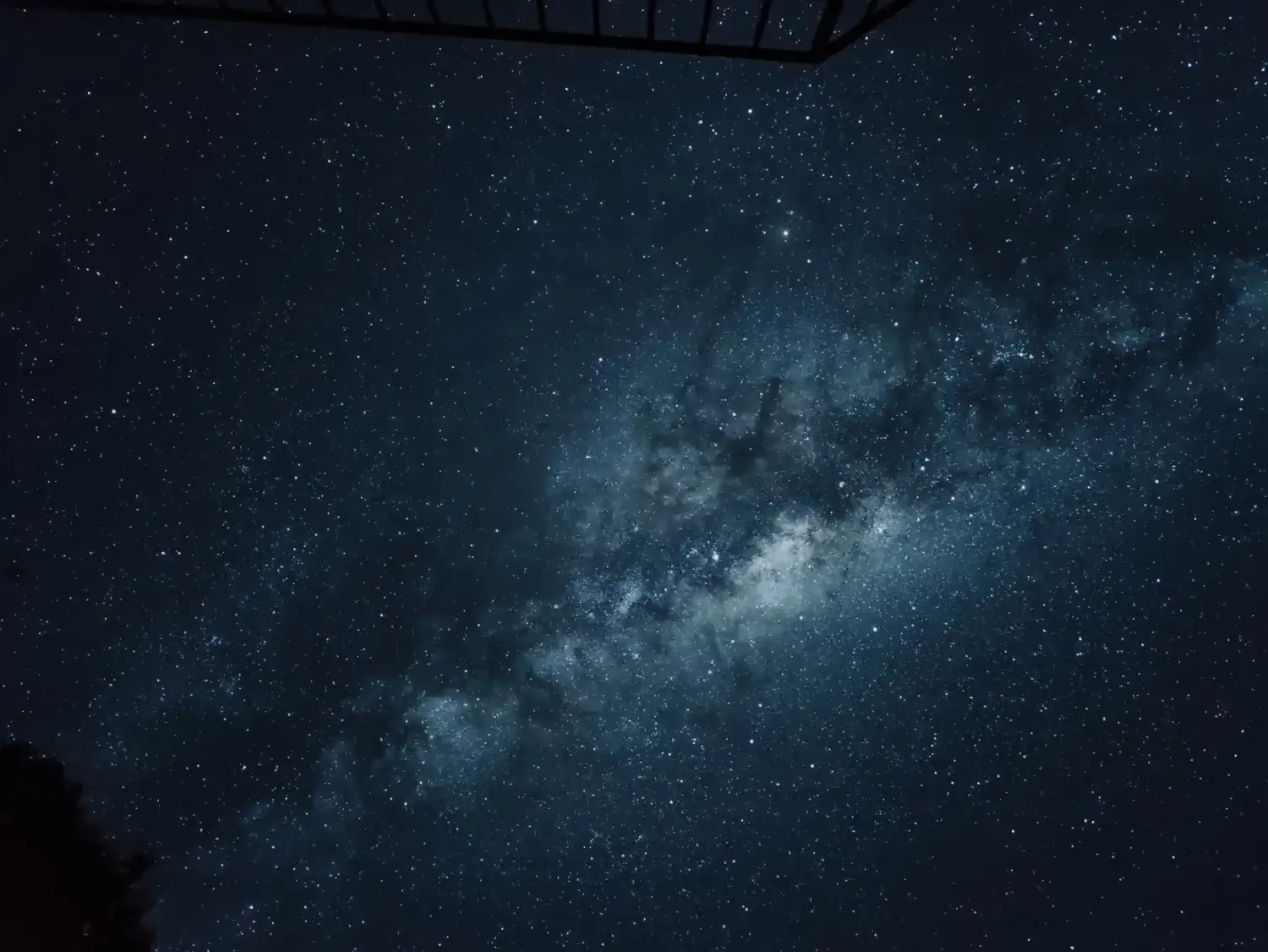
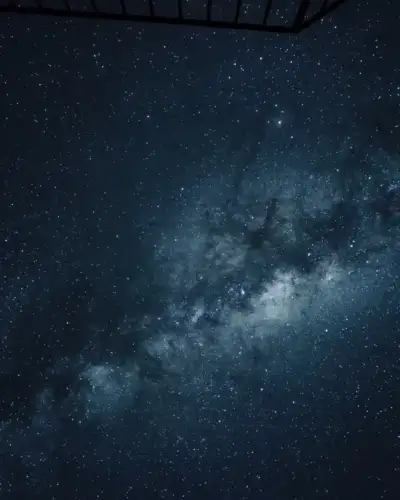
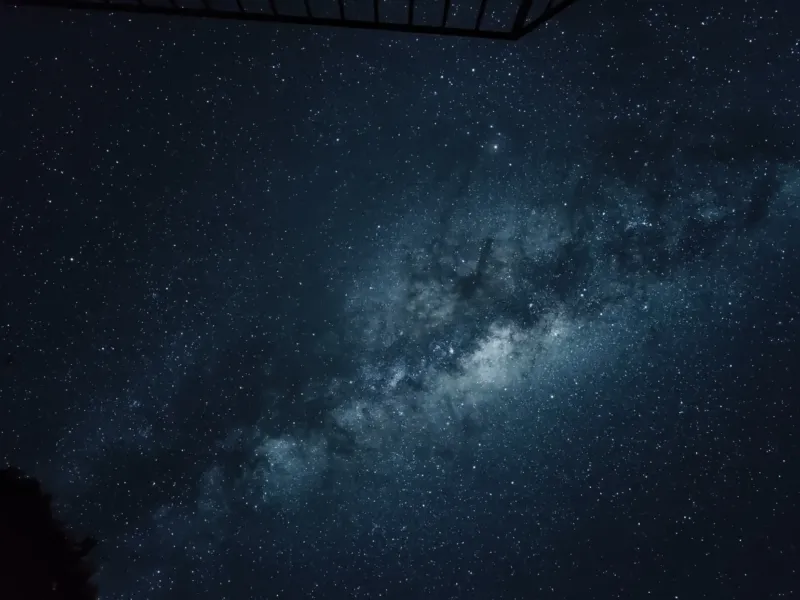
Tonight is the first night you will get a glimpse of the unreal African starry skies - some of the best we have ever seen while on recce here in early 2026.
Accommodation and Meals
Mutarazi Cottages 6 people in each - full board.
Distance: 14.5 km approx
Duration: 6- 8 hours, depending on group size
Maximum Elevation: 1831 m
Ascent 503 m / Descent: 1172 m
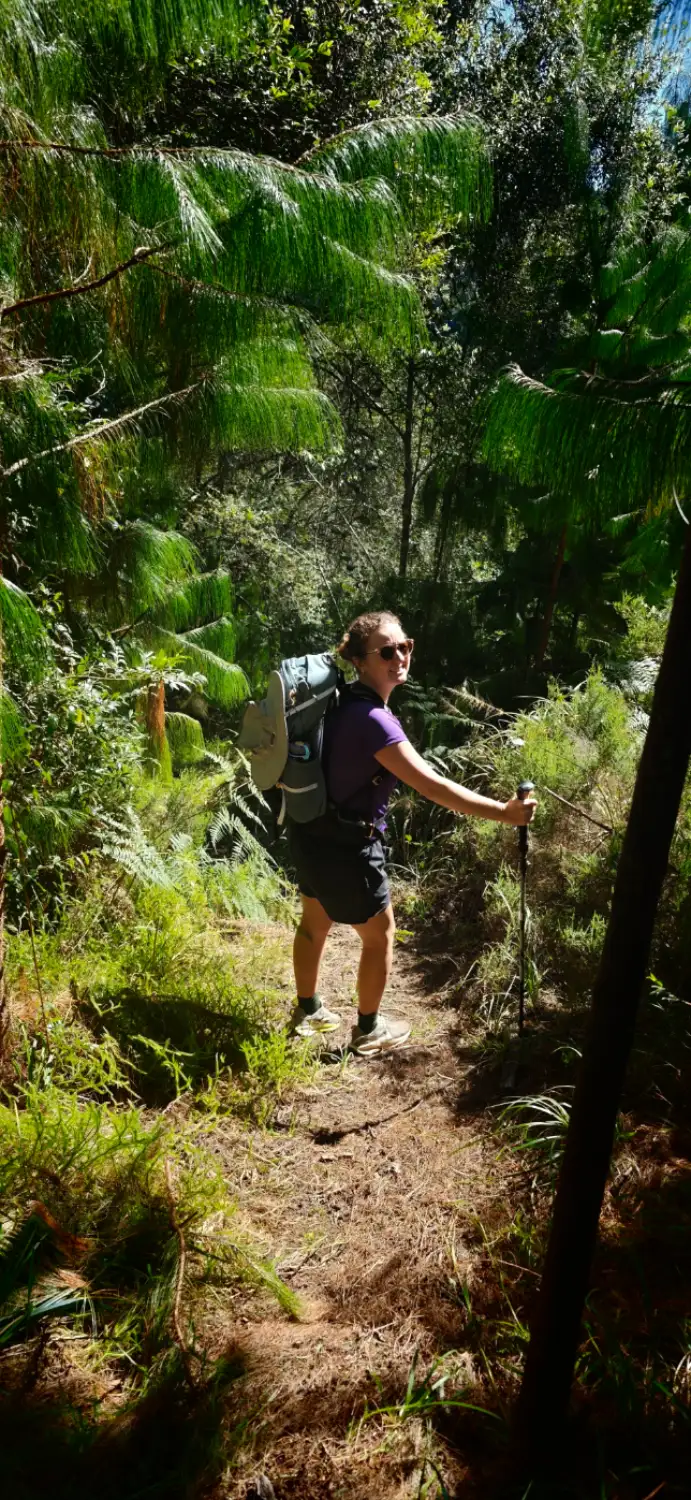
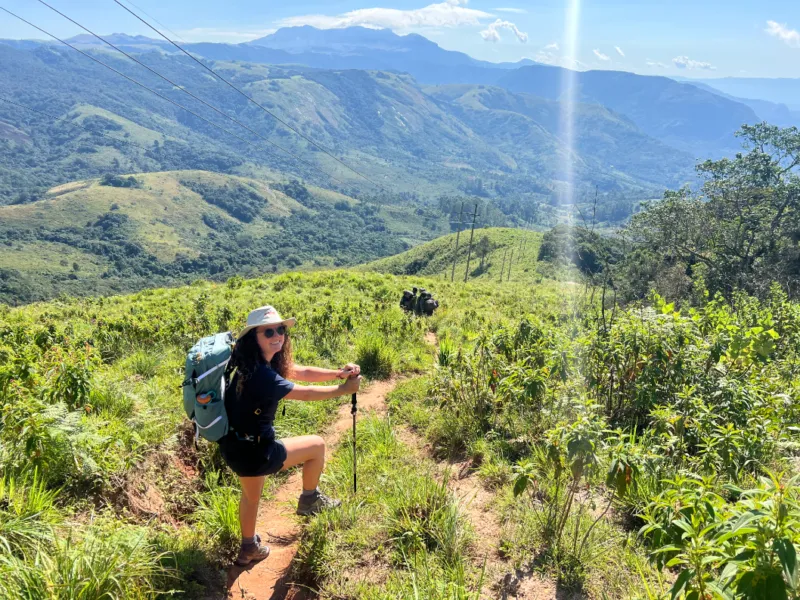
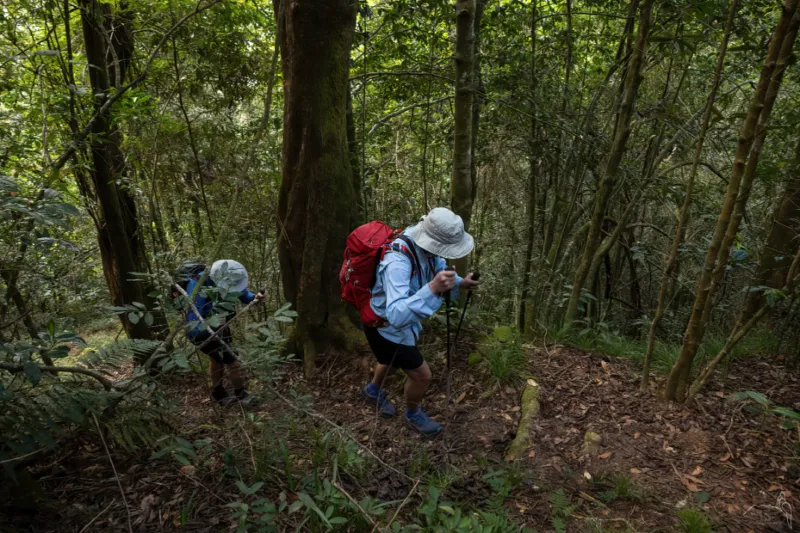
After a hearty breakfast, we begin our adventurous trek from our accommdation. We will journey along the Honde Valley escarpment before navigating our way through untouched Afro-Montane (cool, moist evergreen) forests. Stay quiet and keep your eyes peeled for wildlife such as the Bush Buck, the pretty Livingstone Turaco, the shy Orange Ground Thrush and Blue Duiker (small antelope). Our experienced guides will point out anything that you might have missed.
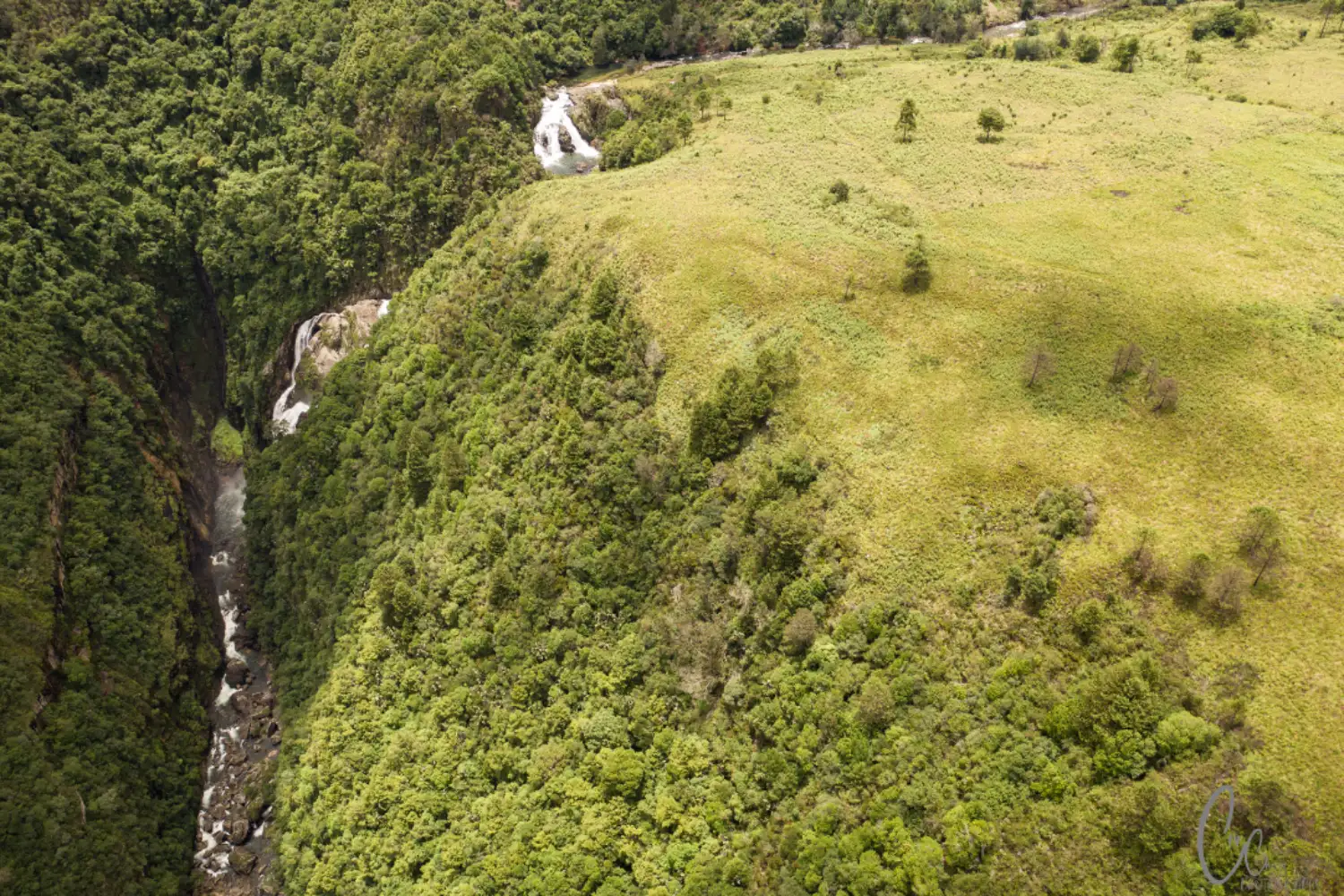
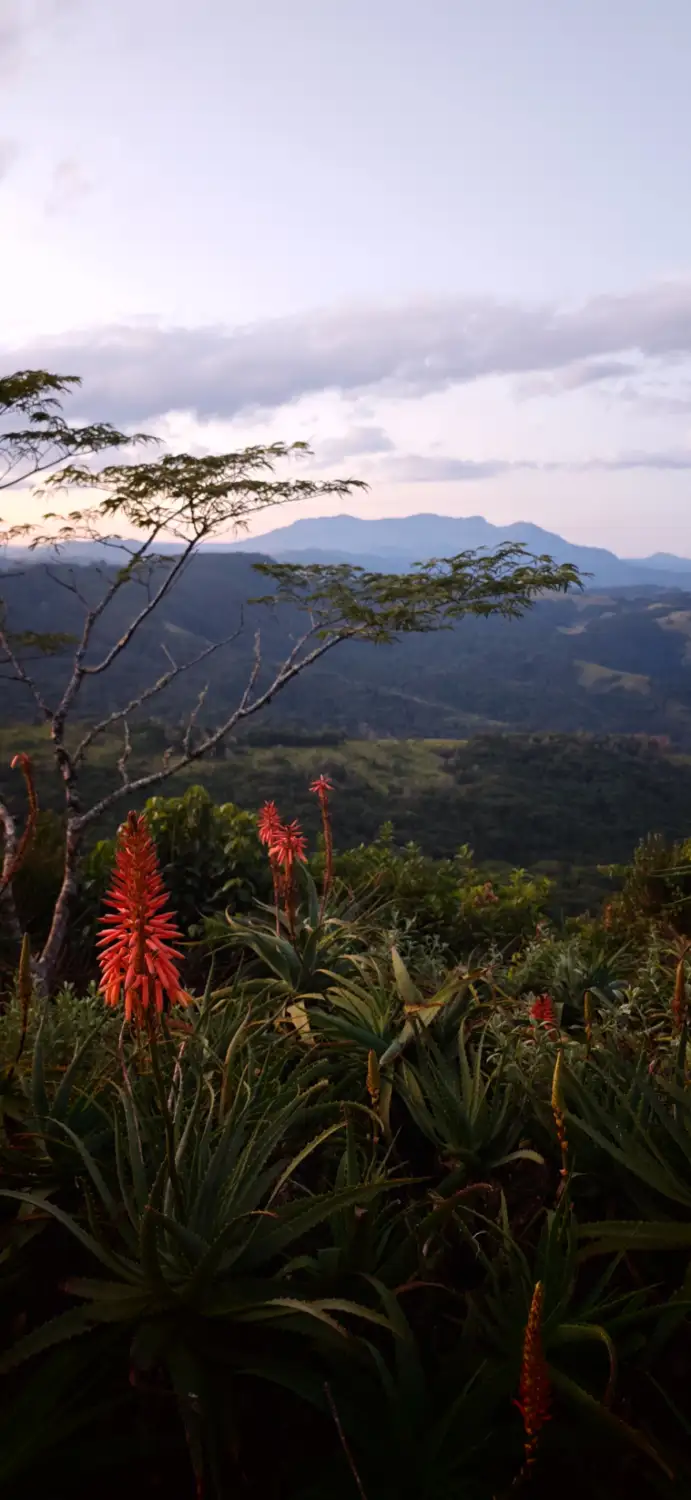
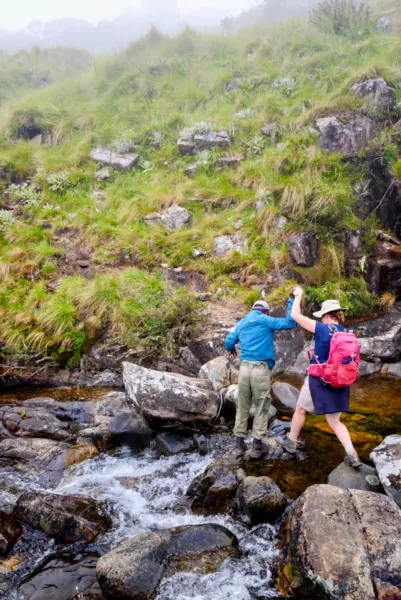
We continue, taking many switchbacks through open montane grassland until we reach a crystal-clear stream, which will be our first water stop. From here, we ascend through riverine forests, grassland, and more Afro-Montane forests towards the summit ridge of Chikorokoto, where the breathtaking Pungwe Gorge unfolds before us. You will be treated to stunning 360-degree views as we walk along the ridge for a couple of kilometres. If you are lucky you might see the troop of baboons that live in this area, you will certainly hear them!
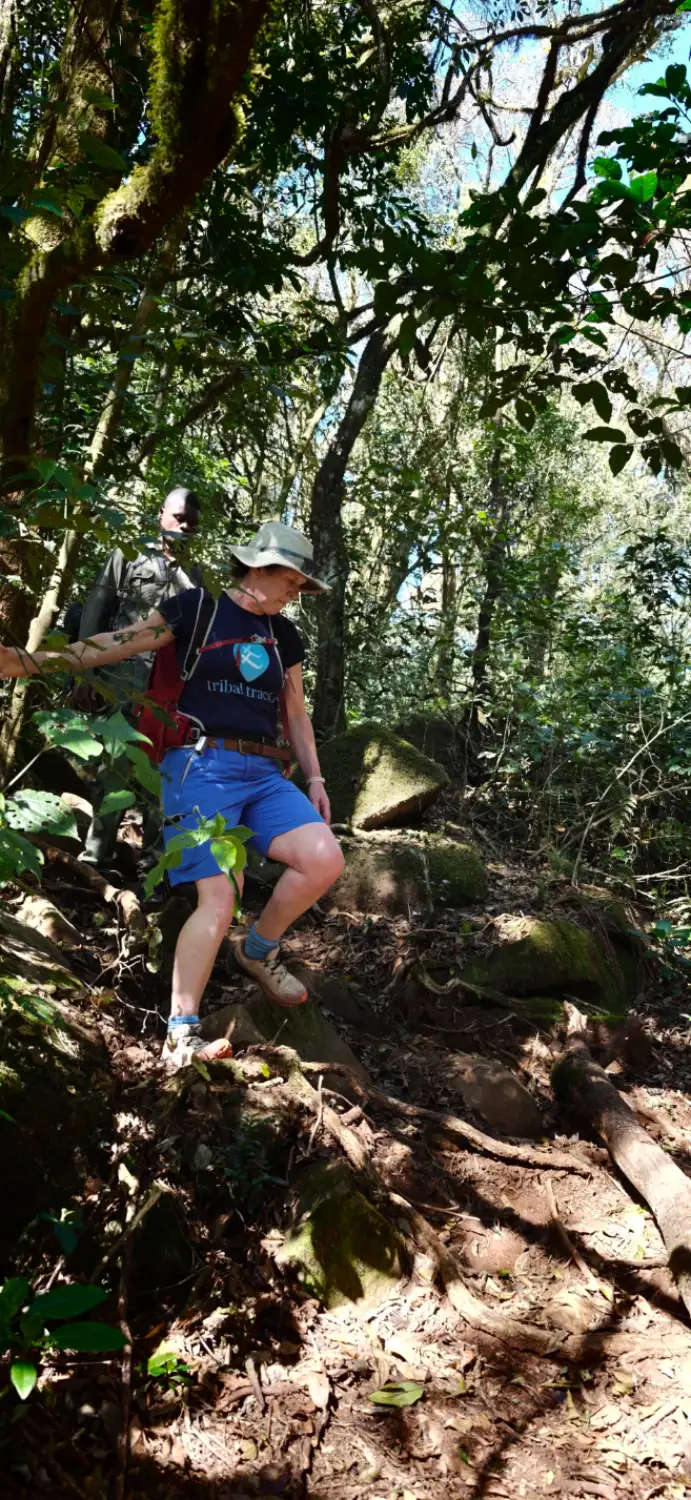
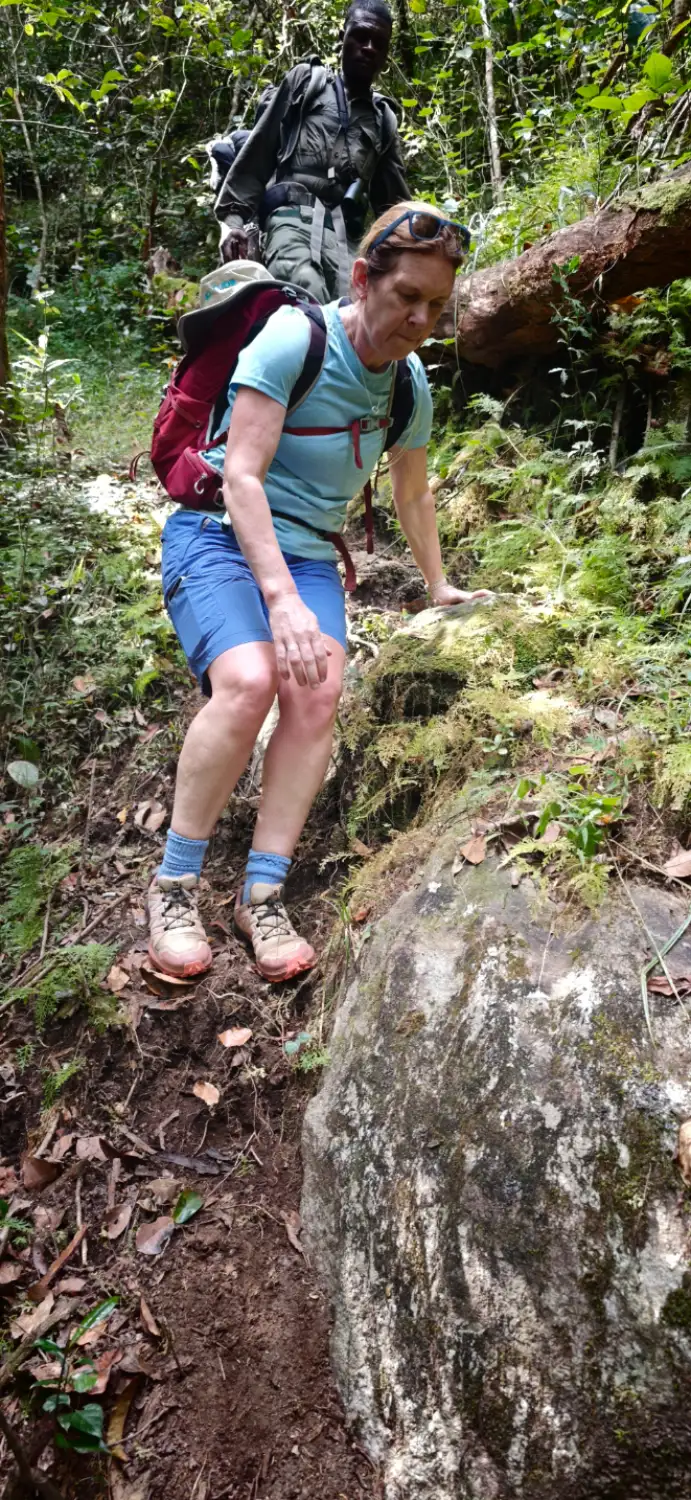
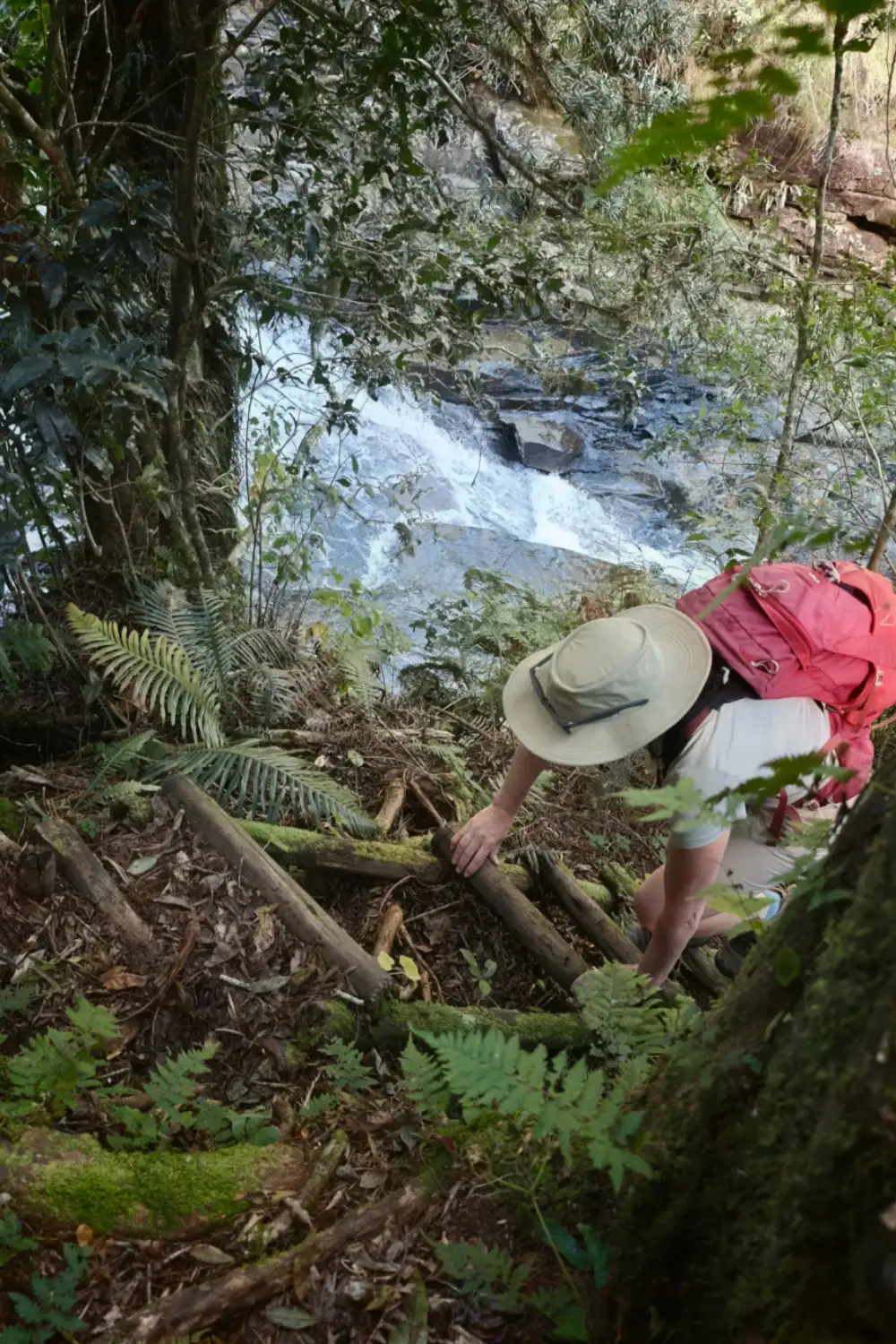
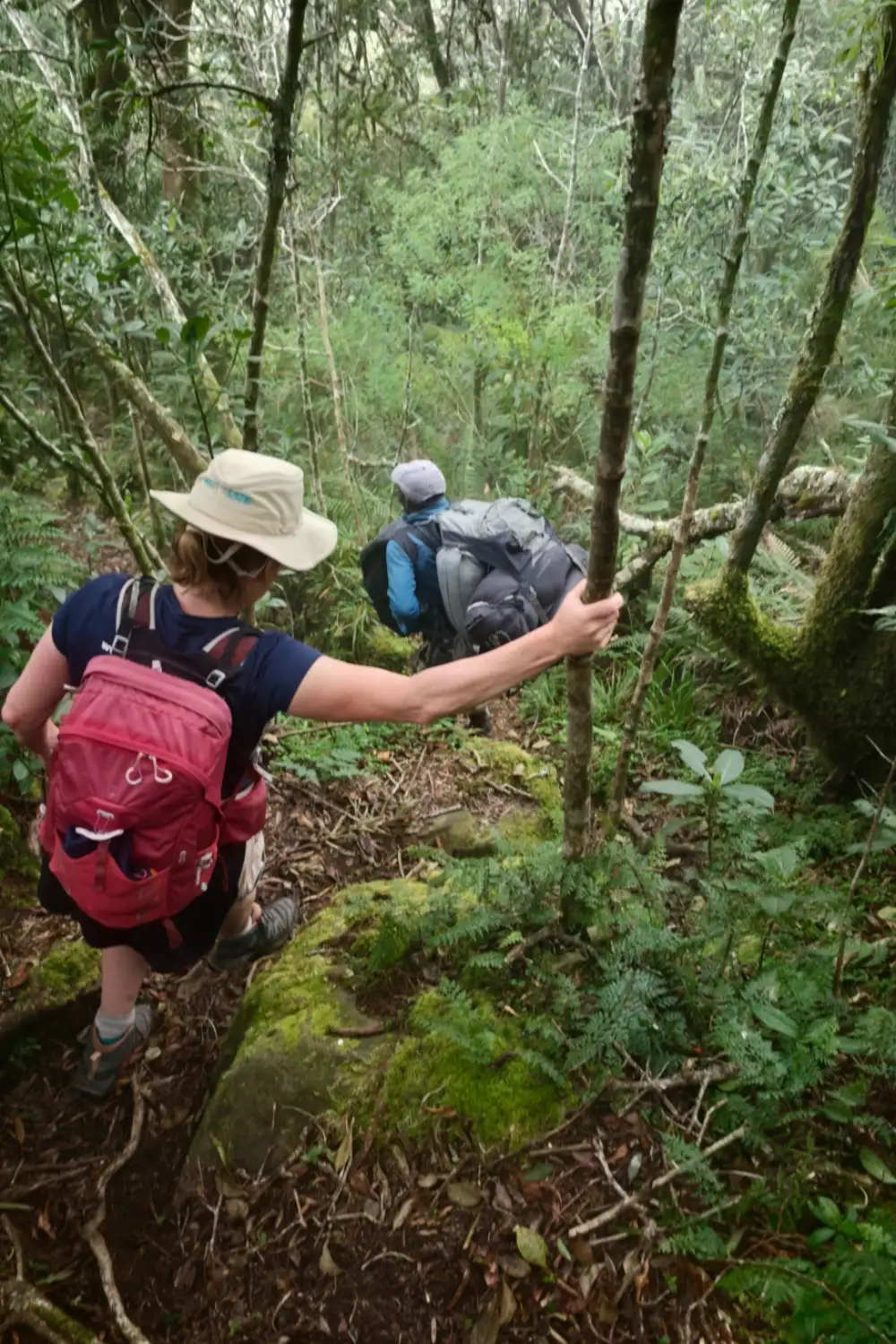
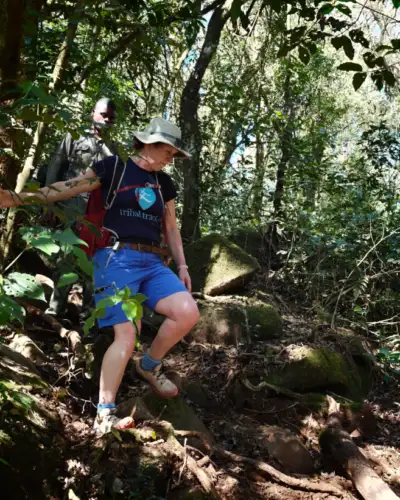
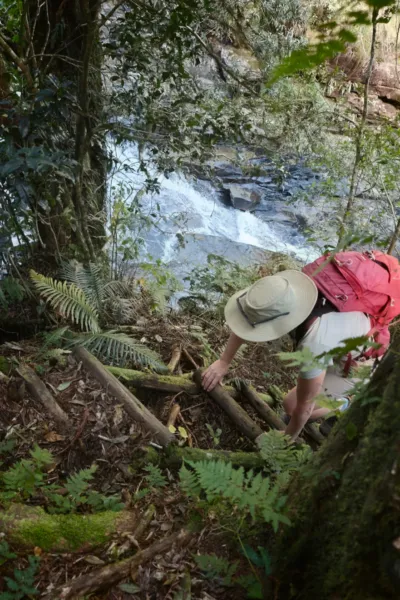
It is then time for a very steep, rocky descent through Miombo woodland (dry tropical forest and savanna ecosystem) into the Gorge itself. Be prepared to concentrate as you navigate tree roots, hanging vines and loose tree trunks (this won't be your last encounter of such obstacles).
When we finally hit the Pungwe River, we trek upstream to our camp. The camp is affectionately named after 'Uncle Eddy', a much-loved adventurer who inspired budding outdoor enthusiasts of all ages.
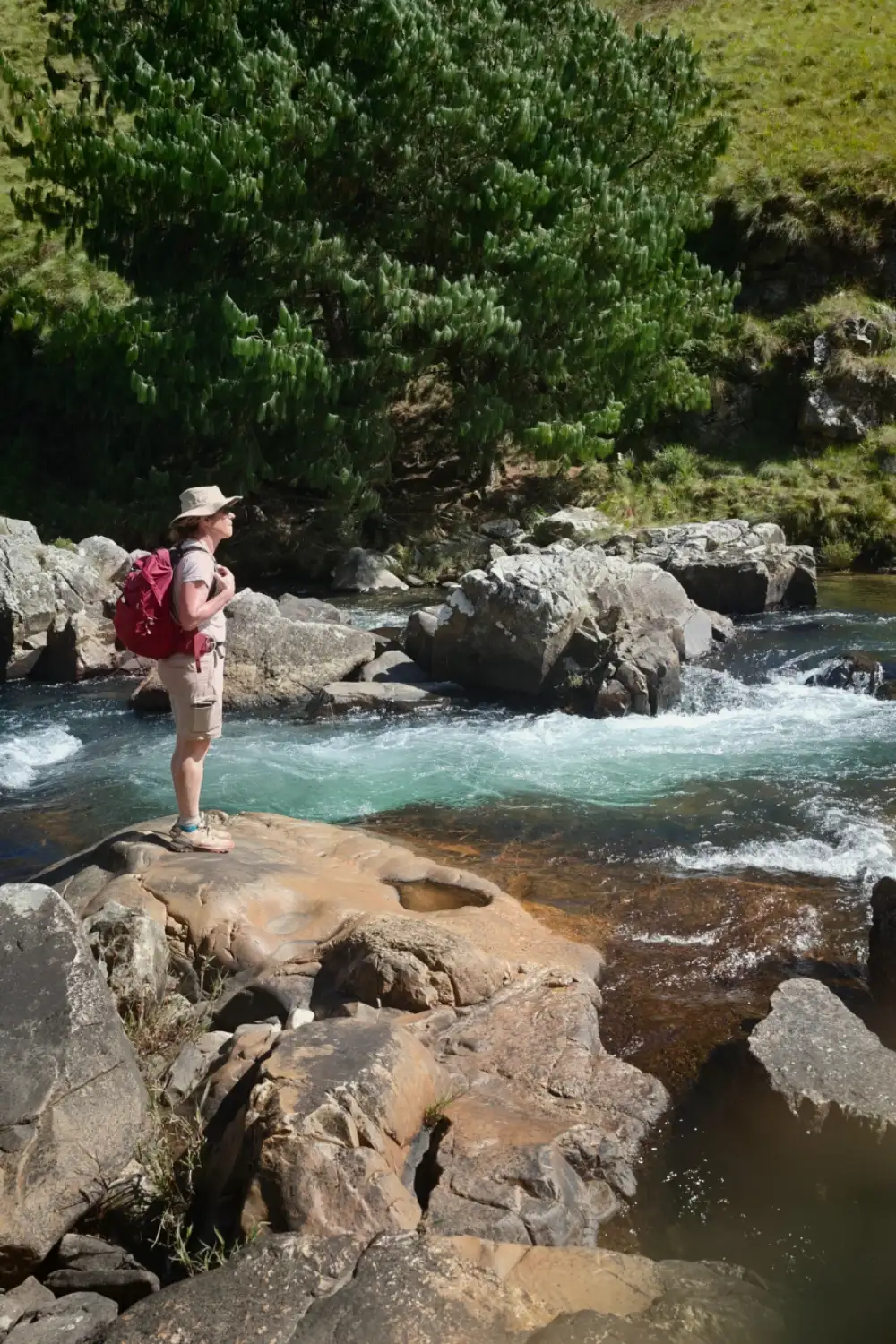
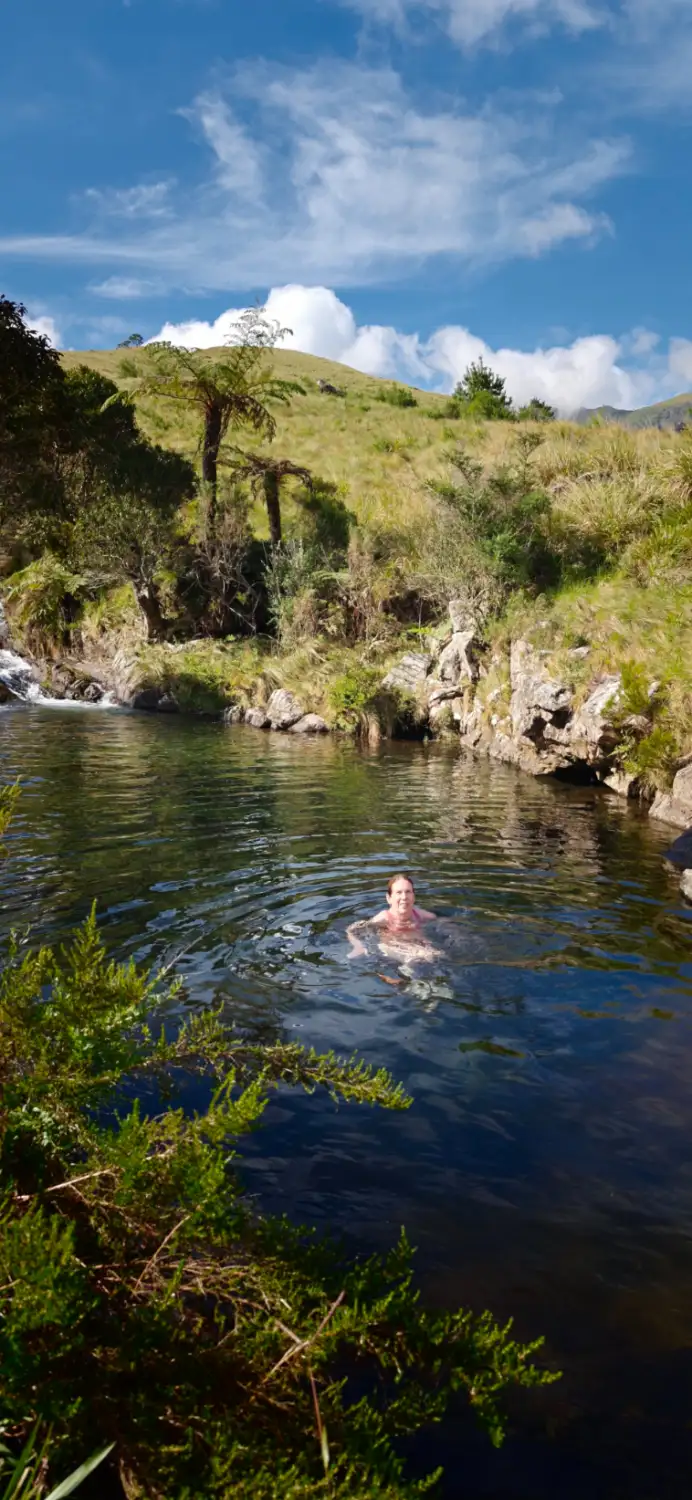
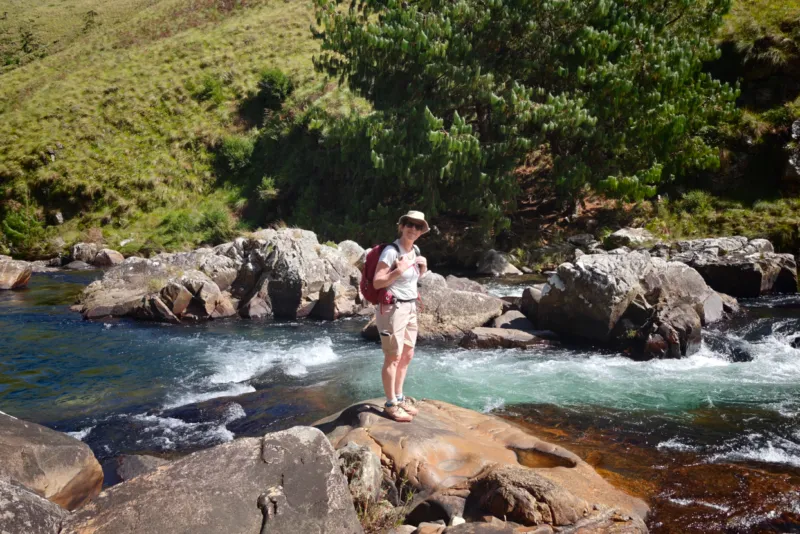
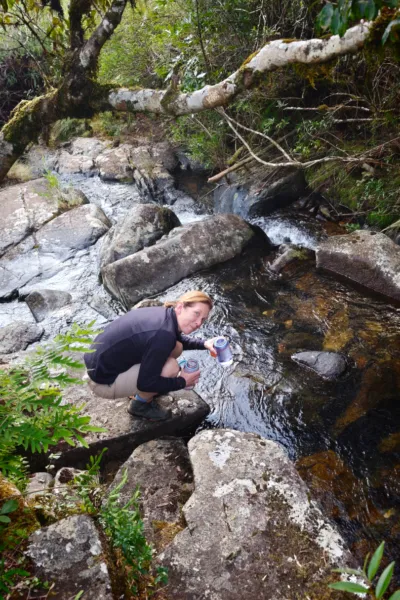
We expect to arrive around 1600hrs. We have the afternoon to enjoy our beautiful, peaceful surroundings, free from distractions - truly off-grid. If you're a confident swimmer, you can take a dip in the crystal-clear waters of the Pungwe River.
We'll light a campfire which will burn throughout the night.
Accommodation and Meals
Eddy's Camp - camping, full board
Distance: 13km approx
Duration: 6.5-8.5 hours
Maximum Elevation: 1696 m
Ascent 776 m /Descent: 247 m
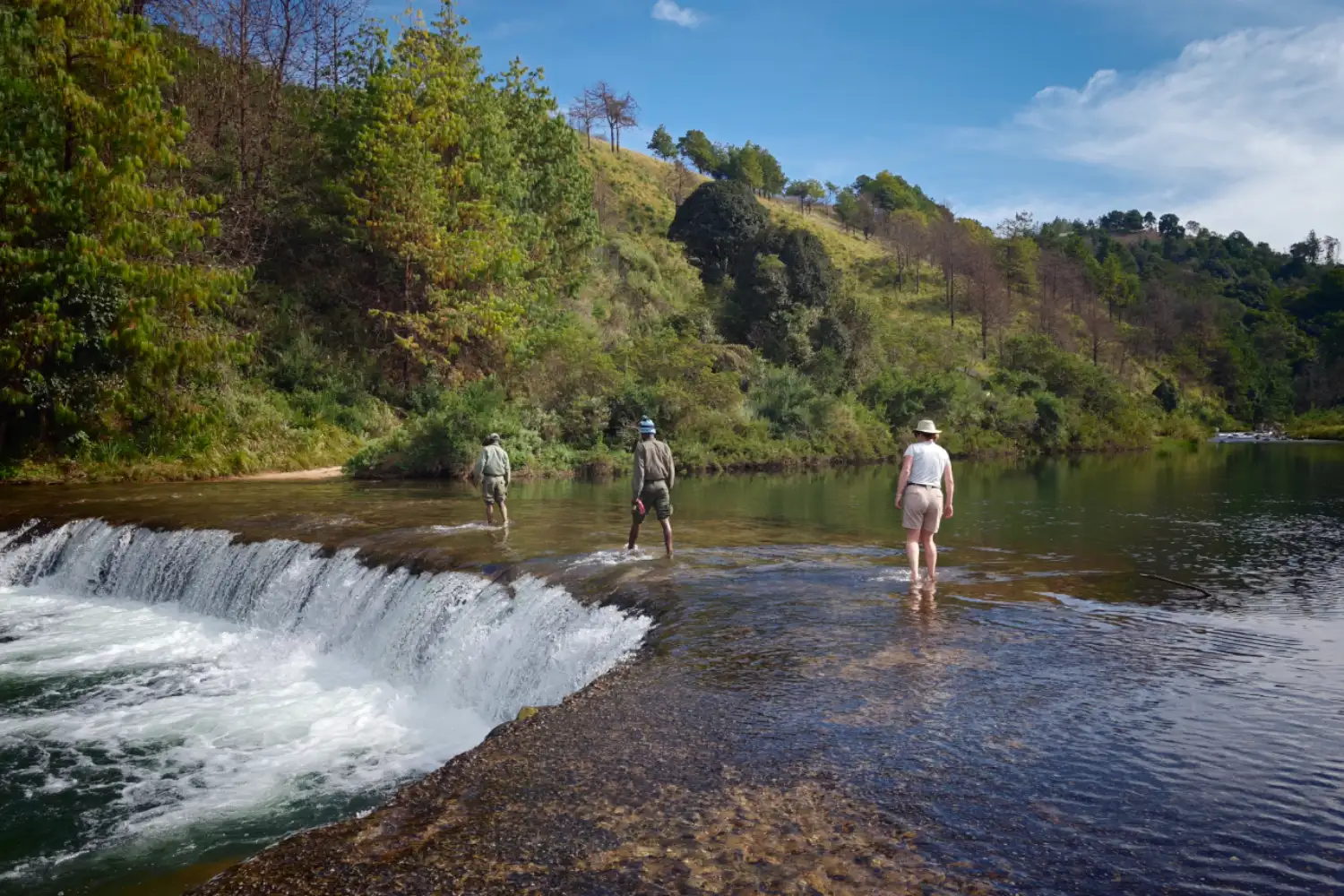
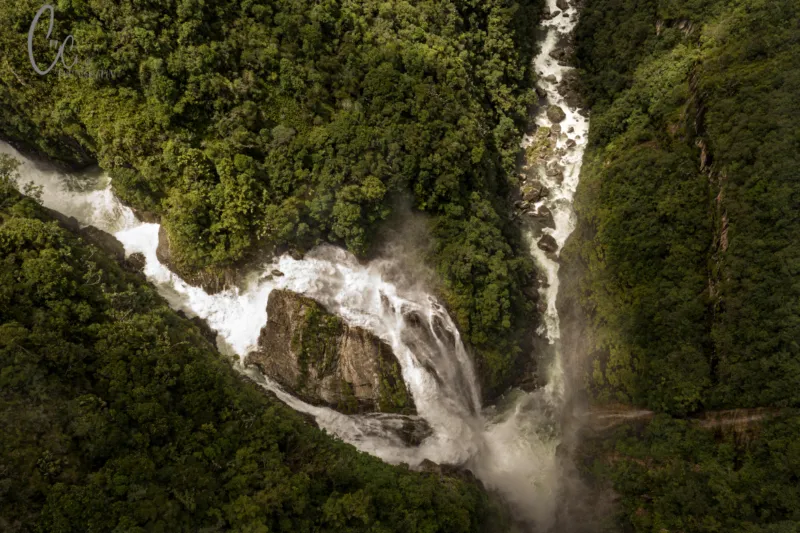
After breakfast around the campfire, we continue our trek, winding along the Pungwe River and surrounded by its stunning vegetation. This morning's trek is a gentle but constant uphill walk before we hit our lunch stop of Bernie's Camp on the edge of the beautiful river. Again, if the water level allows, and you're confident in your swimming ability, you are welcome to take a refreshing dip.
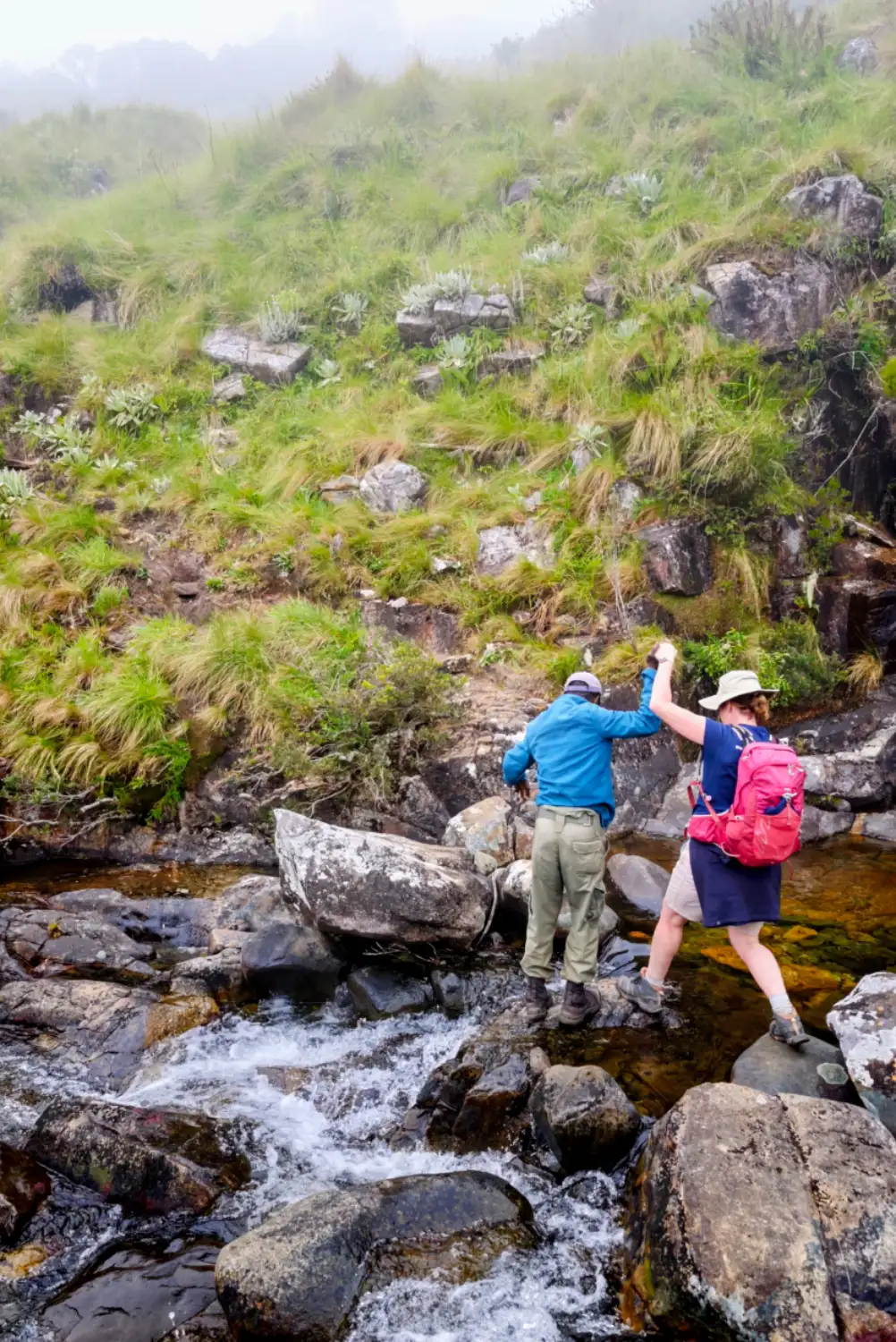
After lunch is an arduous 2km uphill walk to the top of the Pungwe Falls. We walk alongside this remarkable tiered waterfall before the final flat stretch to the Pungwe Drift Cottages. We will take off our shoes for quite a large river crossing, but our guides will help us across, using a rope if necessary.
Depending on the team size, we will either camp just outside the delightful Pungwe Cottages or use the basic but comfortable beds inside them. Either way, there will be a flushing toilet and warm water, heated by the log fire.
A delicious meal will be prepared for us in the kitchen and we can look forward to our easiest trekking day tomorrow.
Accommodation and Meals
Pungwe Cottages - camping (or inside if smaller group), full board
Distance: 12.5 km approx
Duration: 5 - 6 hours
Maximum Elevation: 1839 m
Ascent 303 m / descent: 205 m
Golden Pools to Forest Camp:
Distance: 2.9 km
Duration: 1.5 - 2 hours
Maximum Elevation: 2020 m
Ascent 282 m / Descent 61 m
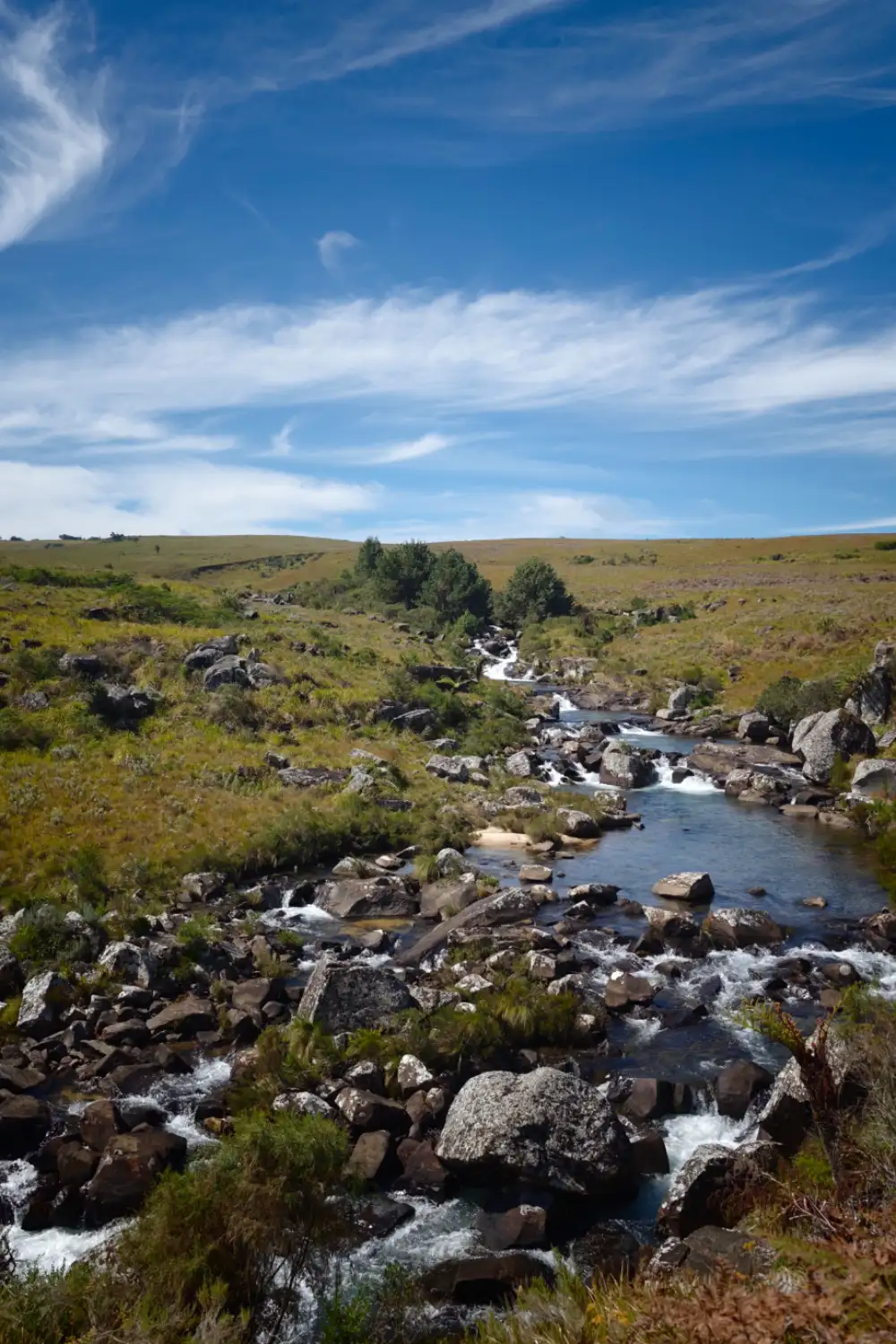
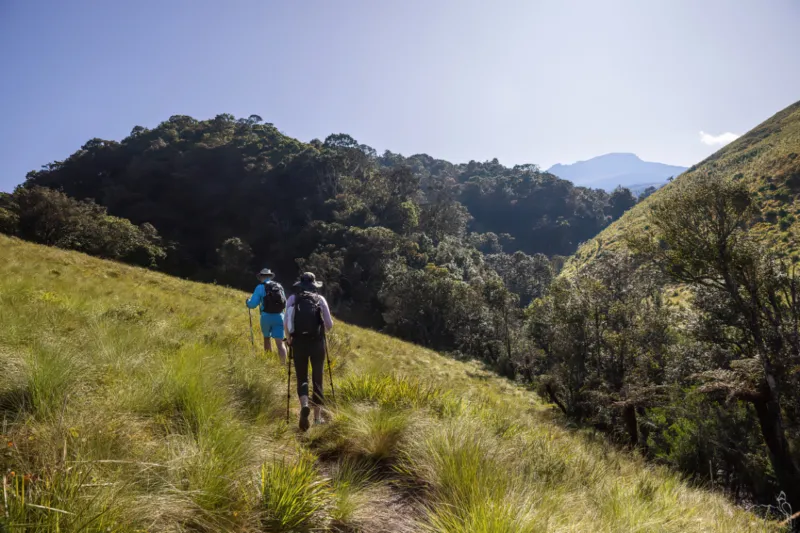
Today is the easiest day of the trek. You can enjoy a morning walking alongside the Pungwe River. We continue across open Montane Grassland and we will reach the confluence of the Pungwe and Mutenderera Rivers. We turn to follow the latter. A stunning section of the hike that showcases stunning geological features, such as oxbow lakes and ancient terracing.
Depending on the weather, or how the weather has been recently, the next section of the trek could be bumpy and/or boggy. Be careful where you place your feet. Once we have navigated the tricky terrain, we will see the Golden Pools Camping area. Although we could stop here for the night (if we arrive later than planned, for example), we will likely push on uphill to the next camp, known as Forest Camp, though not before a refreshing dip in the pools. We would recommend this, when possible, as it is one less hill for you to climb tomorrow, summit day!
As usual, we'll have a fire and a delicious dinner. You might be able to pick up a spot of mobile data here (though we recommend leaving it switched off if you can resist!)
Accommodation and Meals
Golden Pools Camp or Forest Camp - camping, full board
Distance: 9.5 km
Duration: 5 - 7 hours
Maximum Elevation: 2592 m
Ascent 694 m / Descent: 528 m
The only way is up!
This morning we follow the Nyazengu River (Golden Pools) upstream, trekking past breathtaking waterfalls and through a stunning afro-montane forest, and then grassland, leading us toward the base of Mount Nyangani, a mountain steeped in legends, mysteries, and history.
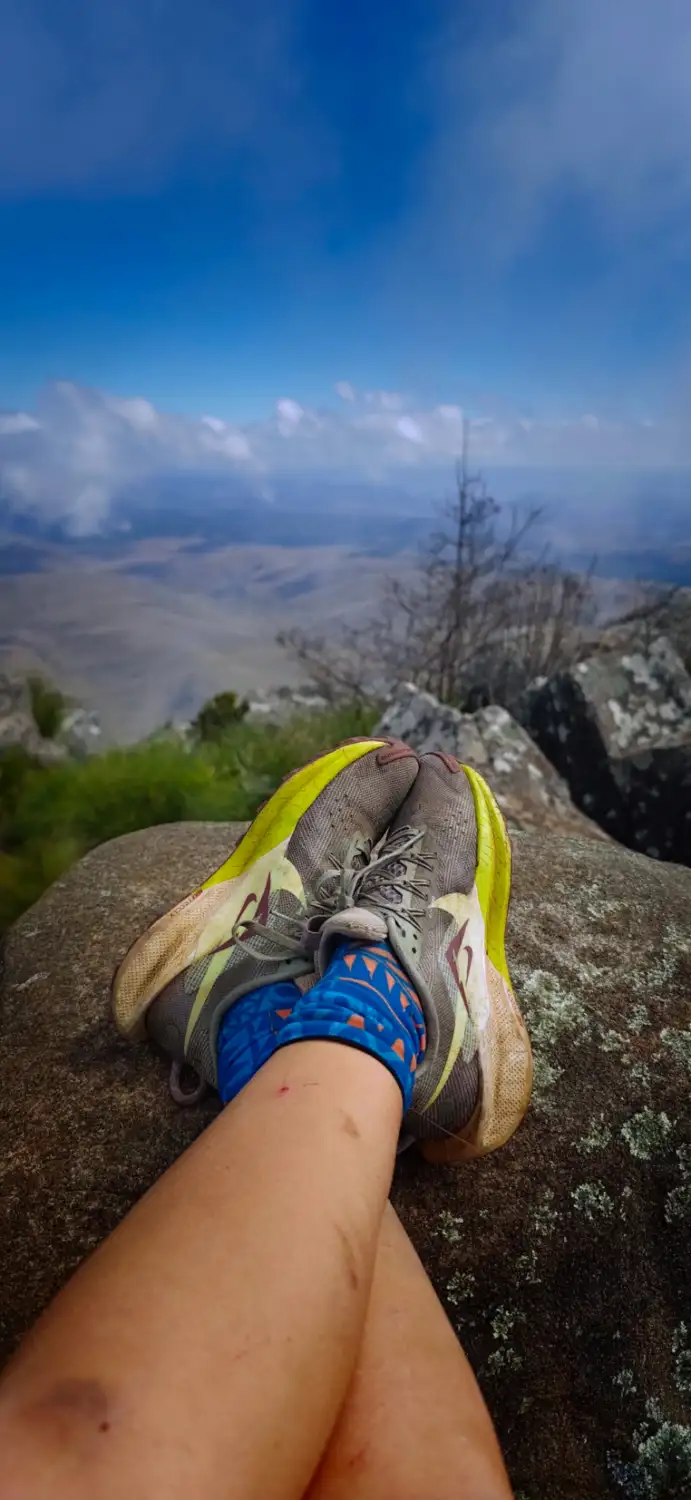
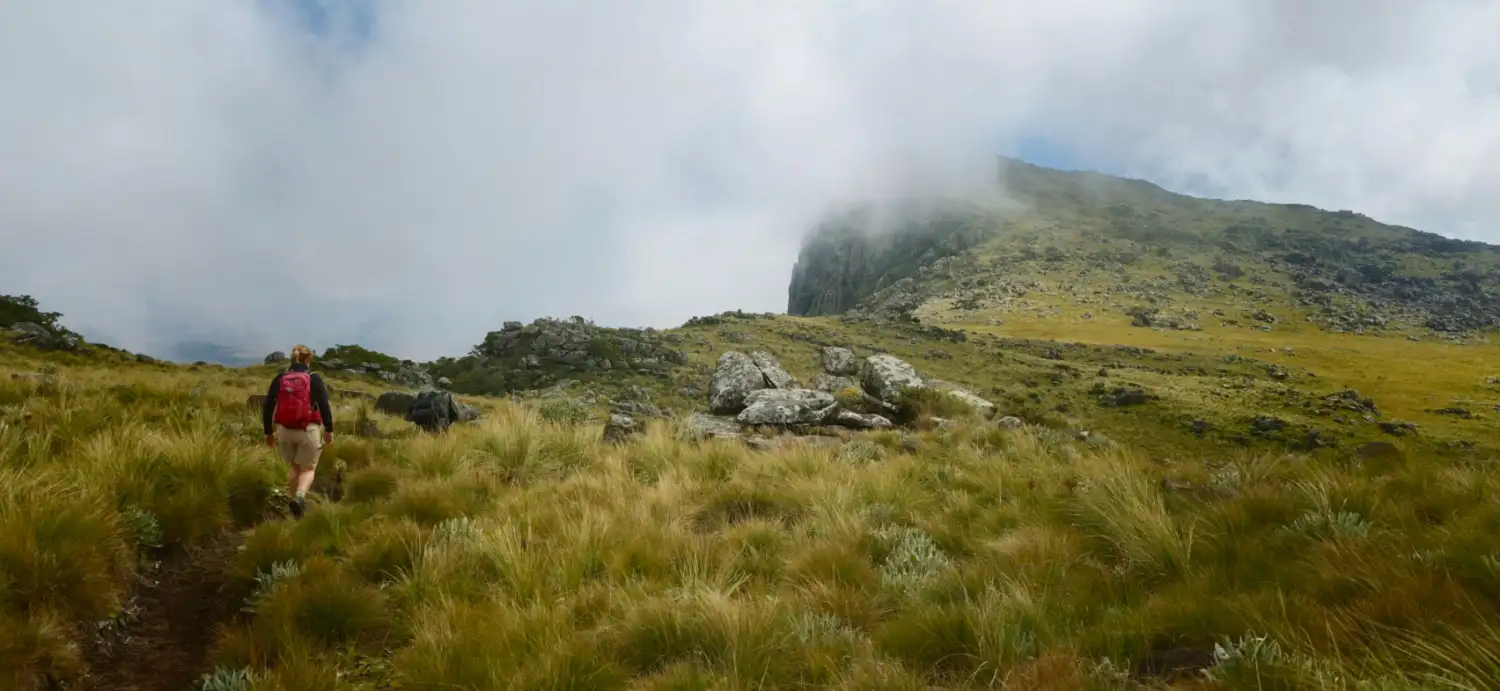
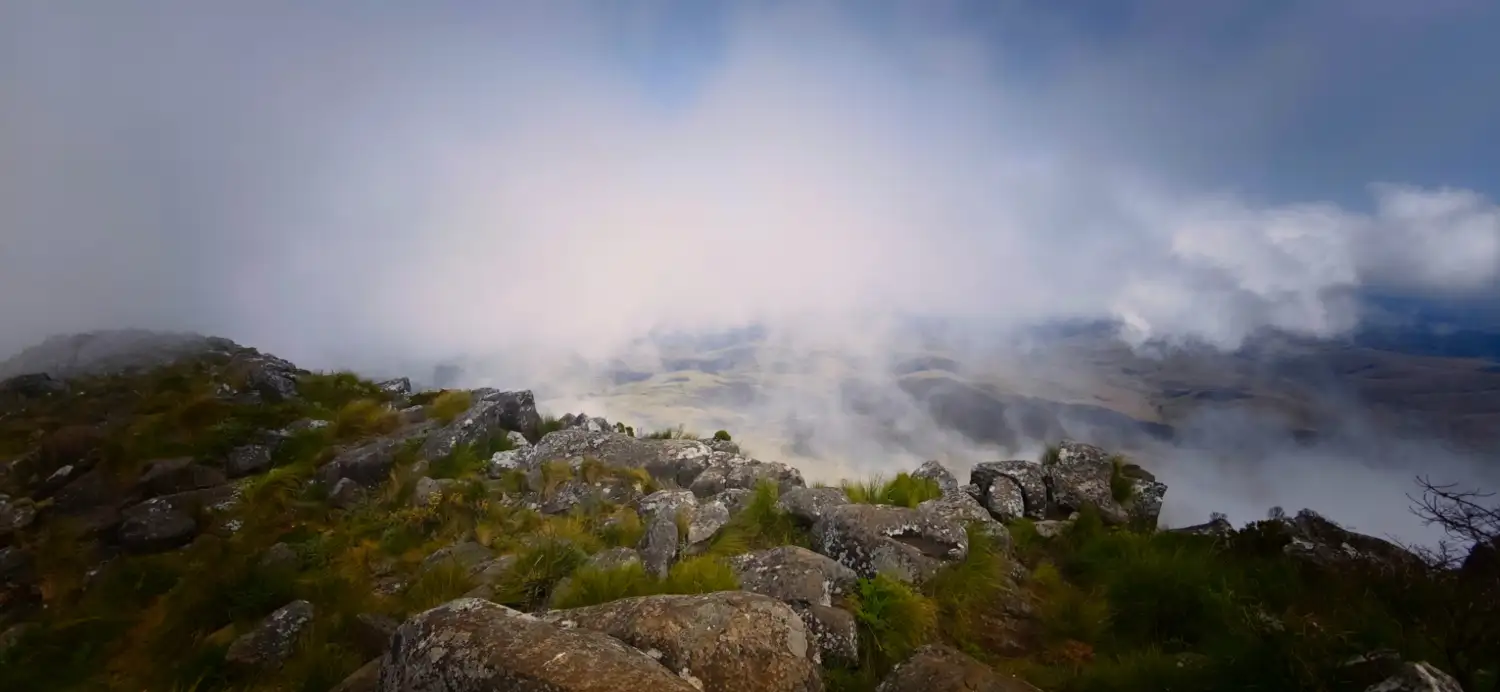
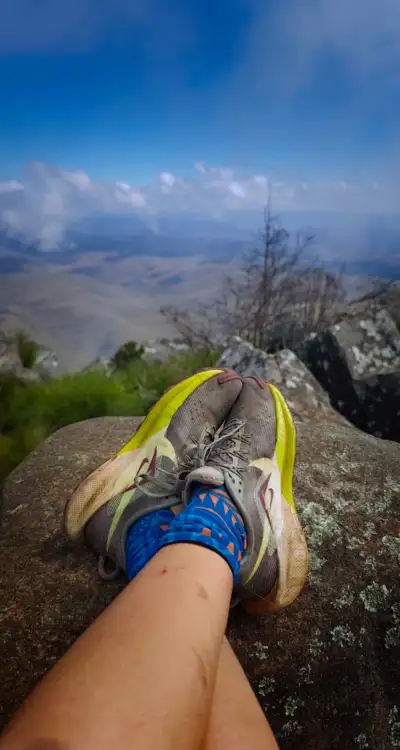
Prepare for a challenging, steep ascent to the plateau near Zimbabwe's highest mountain. You will ascend around 500m in less than 3km, so we will take plenty of breaks. After a short rest, we will head for the summit, thankfully an easier section than the one you have already tackled, though the weather changes quickly and cloud can surround you in minutes (which is why having a guide is so important). Here we cross our fingers for the stunning views across Nyanga National Park from the top. We'll stay here a little while to allow for movement in clouds and to reflect on what we have accomplished so far. We might have lunch at the top!
From the summit, we will descend toward the Gairezi River and into a small, unique forest, the only one on the Nyangani plateau. Our camp for the night is nestled within this enchanting forest. The refreshing spring waters of the Gairezi are nearby for cooling off/a wash. We'll be able to relax at camp from around 1600hrs.
Accommodation and Meals
Juliet's Camp - camping, full board
Distance: 18.0 km
Duration: 7 - 9 hours
Maximum Elevation: 2219 m
Total climb: 428 m
Total descent: 1749 m
Though this is the final day of the trek, it is a lengthy one. We will descend approx 1800m over a distance of 18km - a fairly gradual but long descent, with a couple of steep ascents thrown in for good measure.
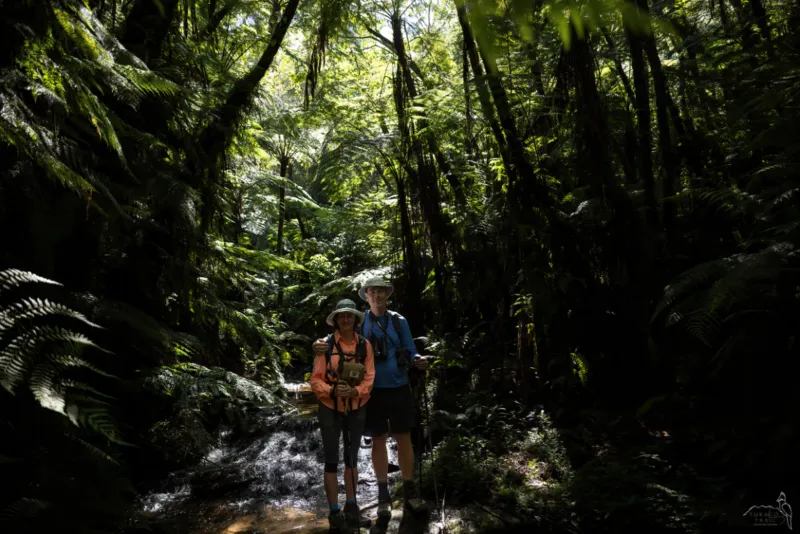
We begin trekking through an ancient terraced fort and pit structure. We wander through prehistoric spiny Tree Fern forests and the enchanting Never Ending Forest, an Afro-Montane forest that seems to stretch endlessly over several hours.
We'll also pass through expansive grasslands and magnificent riverine/riparian forests, where you will also discover sparkling streams and mesmerising waterfalls along the way. The forest will be teeming with butterflies and birds. There will be several river crossings today.
Eventually, the forests will give way to the end of the Aberfoyle Lodge golf course on the Eastern Highlands Tea Estate. You will have truly earned a refreshing cold beer, a delicious meal, and a hot shower, not to mention a comfortable bed.
Accommodation and Meals
Aberfolye Lodge - full board
Return to Harare.
After a delicious hotel breakfast, we can enjoy some time to relax before the long drive back to our original boutique hotel in Harare.
Accommodation and Meals
Boutique Hotel in Harare, full board
Our adventure comes to a close
After breakfast, we will transfer to the airport for our flight home, landing today or tomorrow, depending on flight schedules.
Accommodation and Meals
N/A
Trip Details
Trip Details
The distances/trek stats are actual data from our recce in early 2026. There might vary slightly as precise stats depend on weather/ground conditions and exact camp locations - you might have to walk a little further to avoid a boggy patch of land, for example. We will be trekking for 6-9 hours each day, depending on team size and pace. There will be little to no mobile data access (except on some high ridges) during the trek, but we will carry a satellite phone in case of an emergency.
The trek is supported by porters who will carry your main luggage, not pack animals or jeeps like on some of our treks. This means the weight of your trekking rucksack is limited to 14kg per person. You will be able to leave baggage not needed for the trek behind to meet you at a later point on the trip, likely after Aberfoyle Lodge or back in Harare.
We will be wild camping during the trek. These are basic 'wild' campsites; there are no showers (but plenty of streams and rivers to wash in), and there will be no access to toilets, with the exception of Pungwe Drift Cottages campsite. There will be toilet tents in the campsites or if you prefer a wilder experience you will be provided with a trowel to dig a hole in a discreet place, away from water sources, and you must take all rubbish (wet wipes/toilet roll) with you.
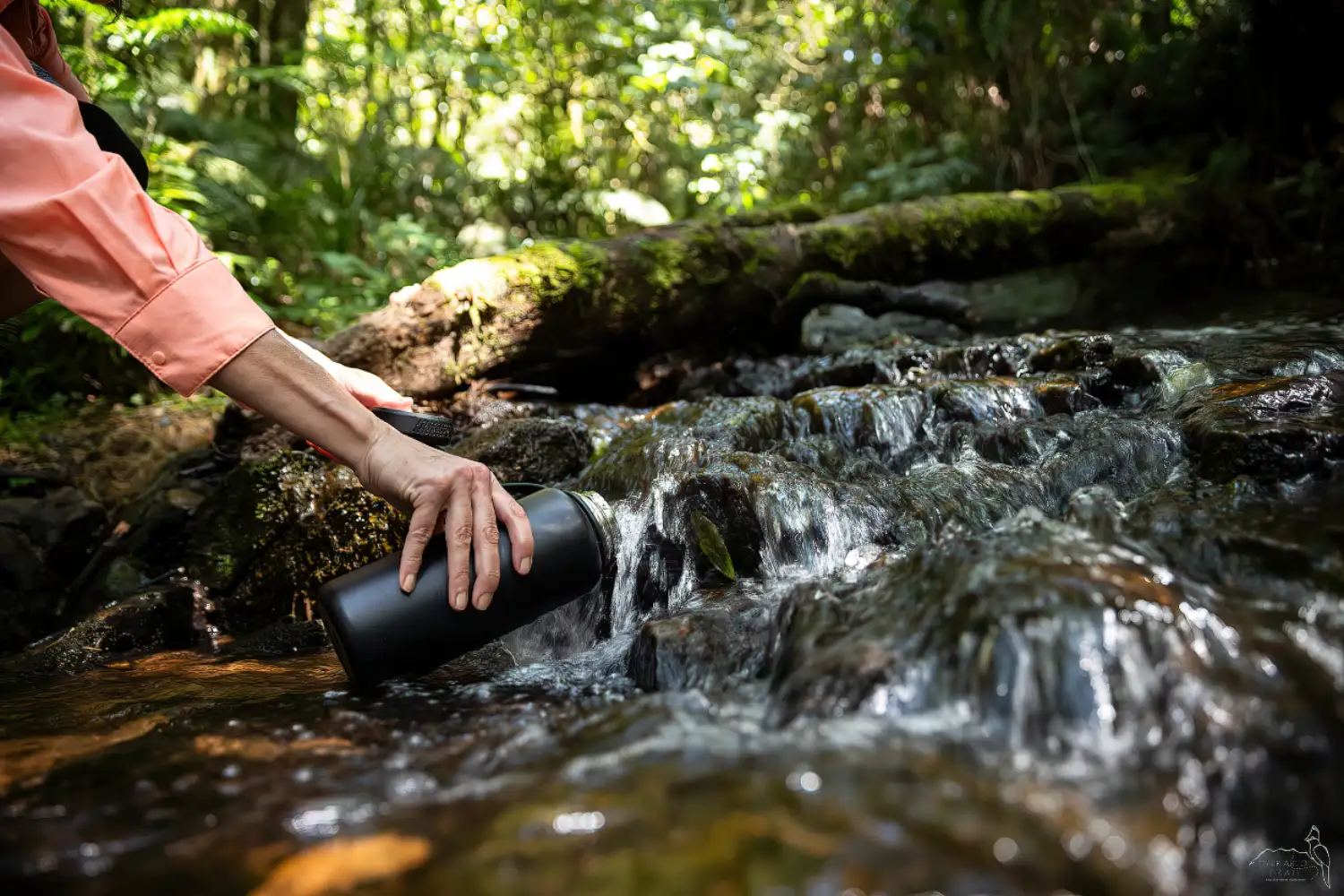
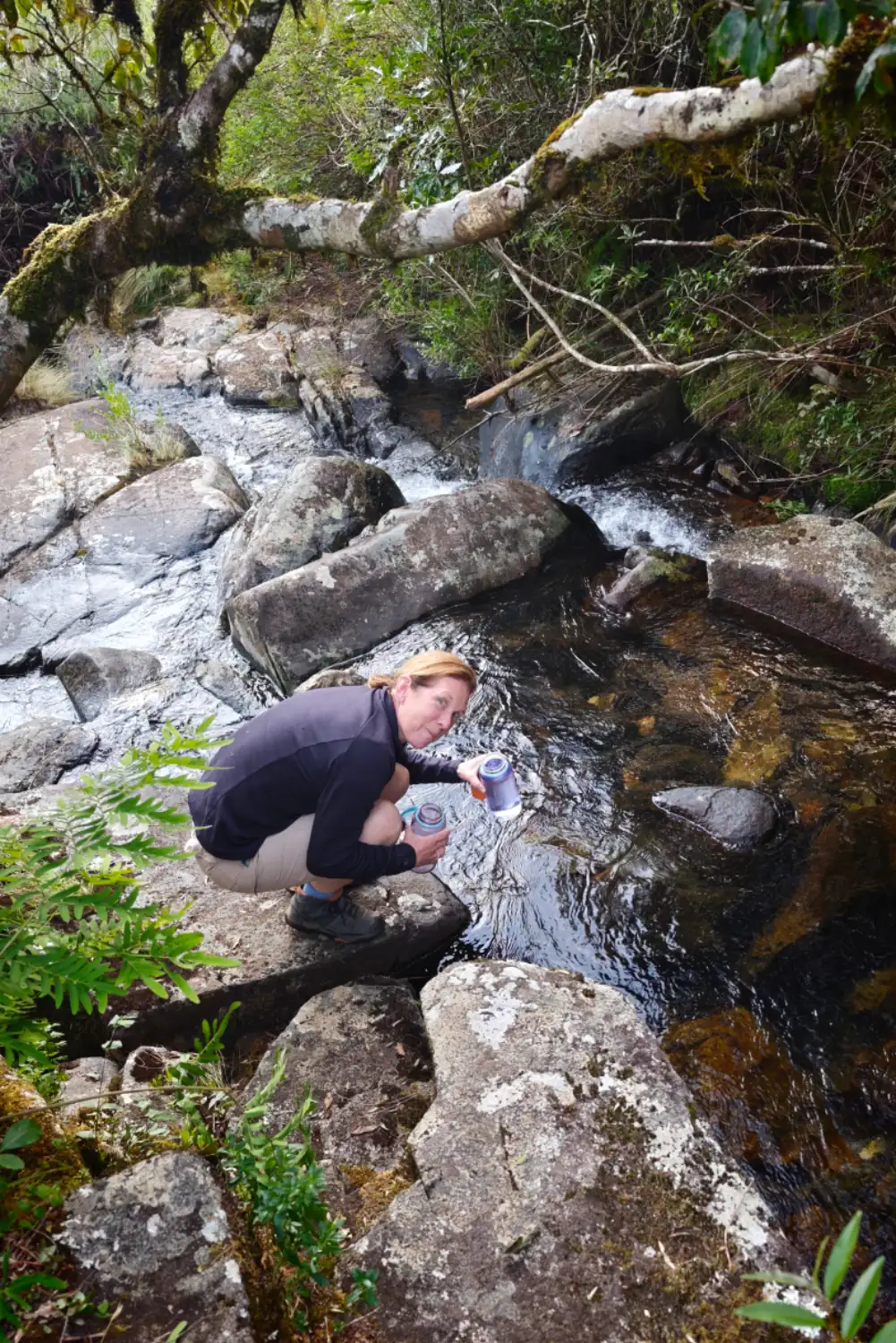
Bottled water will be provided for road transfers. Water is considered safe to drink from the taps and springs throughout the trek, but we advise taking water purification tablets to purify your drinking water. All water on the trek will be collected from the local rivers and springs.
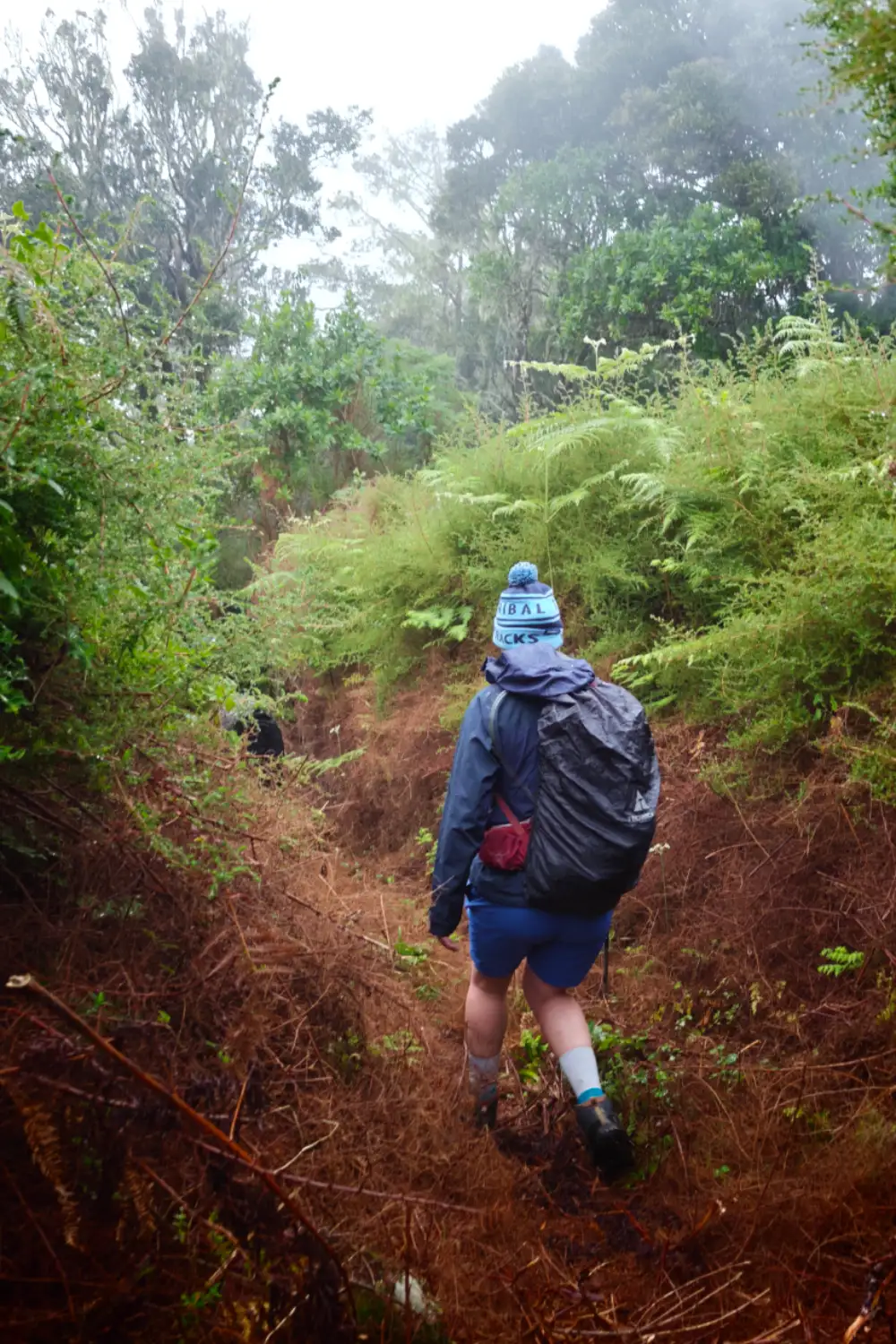
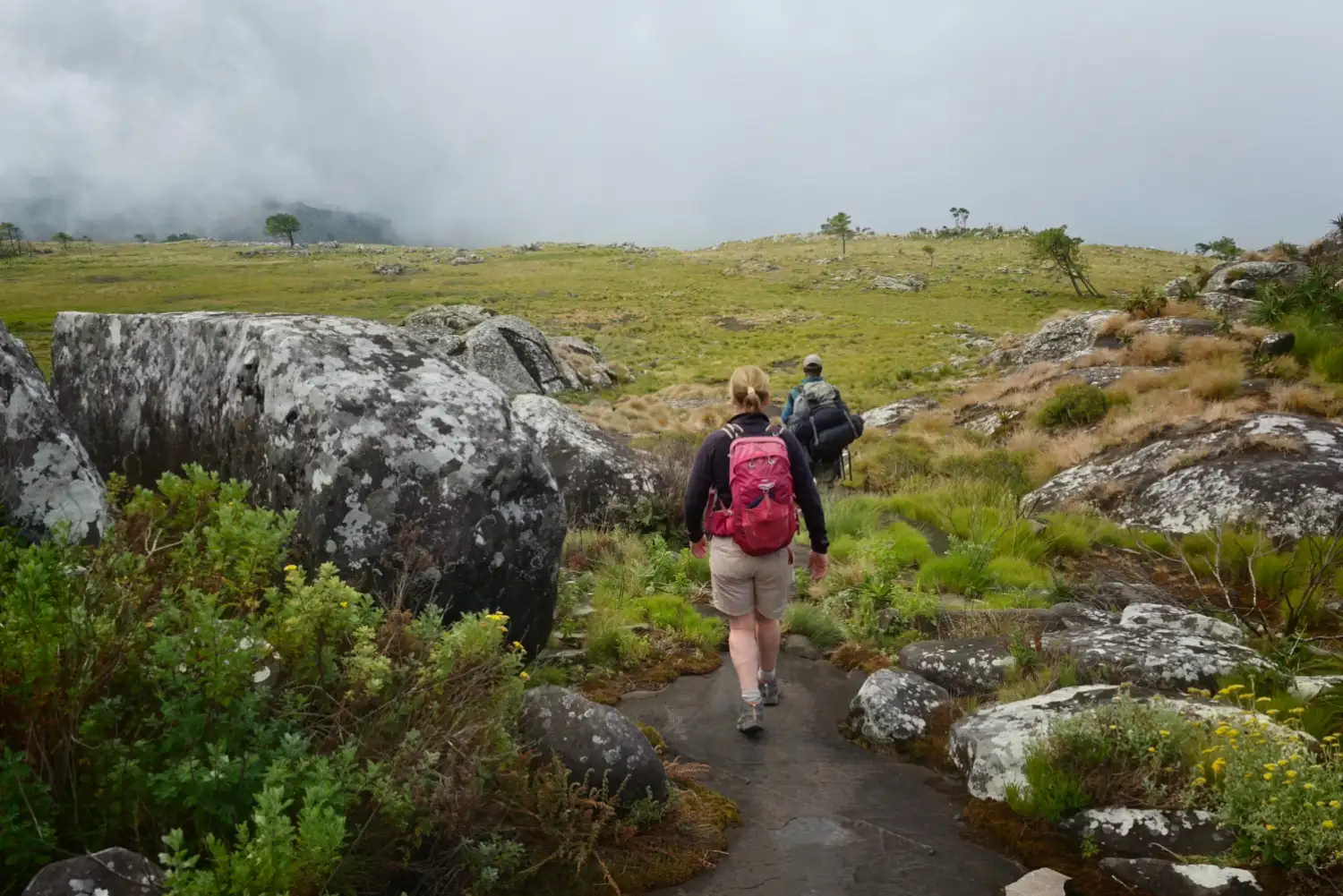
The weather can be changeable in the mountains and we need to be prepared for sunshine, rain and fog during our trek.
This is what you will need to pay for/ buy/source yourself.
In a nutshell, almost everything!
This is what you will need to buy/source yourself.
Tribal Tracks has 100% Financial Protection and has a trust account with the Protected Trust Service, member number 5566.
This means that all client monies paid to Tribal Tracks are held in our dedicated trust account, which is supervised by an independent trustee. This means that in the very unlikely event that Tribal Tracks ceases to trade, your money is safe. For more information, please visit this link. Any flights booked for you by Tribal Tracks will be ATOL-protected under our own ATOL certificate.
In setting the maximum size of our groups, we take a number of factors into account.
Altitude, degree of difficulty, the terrain, the climate and time of year, all determine the maximum group size. Sometimes it will be 20, sometimes it will be 8-14, but safety is always our priority.
You will be accompanied by a Mountain Leader qualified Tribal Tracks UK Leader as well as supported by our local, in-country guides. If you are travelling with a charity team, someone from the charity will likely accompany the group too.
If your flights are included in the trip price you will automatically be booked on to the same flights as everyone else in the team, unless you let us know before or on booking. If you want to book your own flights, you need to ensure that you coordinate your arrival and departure times with the trip’s itinerary. If your dates/timings don’t align with the itinerary, you will be responsible for costs incurred for additional airport transfers or accommodation arrangements.
Tribal Tracks can book alternative flights for you (for example, from a different departure airport) but this may incur an extra charge. We will liaise with you about costs before booking to ensure you’re happy to proceed.
It is really important that you are well prepared for your physical challenge and that you are confident that you will be able to fully participate.
Although our leaders are well trained to deal with different capabilities, if they have any concerns about someone’s ability to safely partake in the trek, or their impact on other people’s enjoyment, we authorise them to take necessary action which, in some circumstances, may involve asking someone to step out of the trek. Although this is a very rare occurrence, by booking this trip you agree to section 11 of our Booking Conditions which clearly states that our leaders have the authority to do this. In these circumstances, we will ensure anyone sitting out is safely provided for and offered alternative options where possible. Refunds will not be provided for activities missed and customers may be liable for additional costs incurred.
Please check the most recent FCDO advice.
As this can change regularly, please check the most recent FCDO advice. We will advise of the current requirement in the pre-departure meeting closer to departure.
It is a requirement of Tribal Tracks booking terms and conditions that each supporter must hold their own travel insurance, which covers the trip and the activities they are doing. Read more here.
We advise you to put insurance in place as soon as possible, ideally on booking so you are covered immediately. There have been instances where someone has signed up, broken their leg a few weeks later, and been deemed unfit to travel. If travel insurance were in place, the non-refundable deposit could be claimed back from the insurance policy. Without this, your money is lost.
Your insurance must be valid and in date, covering the entire period that you are travelling for, including the return journey home. It must cover medical and personal accident risks, and should include repatriation costs and air ambulance or helicopter rescue services, where appropriate.
We will need to know the travel insurance provider, your policy number and the 24 hour medical/emergency assistance number.
Please inform us of any dietary requirements or allergies before you travel, and preferably at the time of booking and no later than 4 weeks prior to departure. We can cater to almost any diet, but only if we know about it beforehand.
For up-to-date vaccination information, please visit Travel Health Pro to see the most recent recommendations for your itinerary.
Although we are travel experts, we are not medical specialists, so we cannot explicitly recommend what vaccinations you should or shouldn't have. Always seek the advice of a medical professional if you are unsure. They will likely want to see a copy of your itinerary, and can then best advise whether they think an advised or 'to consider' vaccination is appropriate for you.
Please note that information on vaccinations can change at short notice.
At Tribal Tracks, Responsible Travel is enormously important to us, and our commitment to responsible travel is evidenced in every itinerary that we prepare.
Core to our business is the belief that holidays can and should be enjoyable to the traveller but should be conducted in a socially, environmentally and economically responsible manner which brings benefit to local communities. This is implemented through a variety of measures which can be found in our Responsible Travel policy. We encourage you to read this and to play your own part in travelling responsibly.
The Foreign, Commonwealth & Development Office (FCDO) monitors all overseas destinations and offers advice to British citizens. In order to be fully informed of safety issues, crime rates, political stability and local laws and customs, you can view the advice here.
We monitor FCDO advice carefully and may, on occasion, be required to cancel trips, reroute itineraries, or make other changes to trips based on the FCDO advice. Any decision will always be made in your best interests and fully communicated to you.
Tribal Tracks considers the safety of all of its participants and staff to be a top priority, and as such we have thorough safety systems in place.
In the event of an injury, we have an evacuation plan in place for all elements of the trek route. We do ask that you look after yourself during the trek in the following way, as this will help avoid unnecessary problems:
It is always important to have precautions in place to avoid heat-related illnesses that can spoil your day or adventure. Click here to find a couple of tips to help you stay safe and comfortable.
In many tropical countries, mosquitoes can spread diseases such as Dengue, Chikungunya, West Nile Virus, Malaria, Yellow Fever, and Zika virus. It is essential that you seek medical advice prior to travel, and especially if you are pregnant or have an underlying medical condition. Whilst travelling there are several simple measures you can take to reduce your risk of infections spread by mosquitoes: wear suitable clothing and cover up at times of day when mosquitoes are active, use insect repellent on exposed skin (containing 20% to 30% DEET), and use a mosquito net if sleeping in unscreened accommodation.
It is important to seek prompt medical attention if you have a fever or display any other symptoms. If you become unwell on your return, make sure you tell your doctor about any trips abroad you have taken in the past year.
We know that the unexpected can happen.
While you are away, things can happen at home and people may need to get in contact with you. This can be tricky when you are in remote areas. So, shortly before departure, we provide you with an Emergency Procedure document to distribute to your nearest and dearest. This sets out how to contact Tribal Tracks and the steps Tribal Tracks will then take to get in contact with you.
If you're not happy with something, please talk to the Tribal Tracks Leader. They are there to ensure your experience is as enjoyable as possible. They can only act on what they know, so please don’t be afraid to raise anything that needs addressing with them and certainly don’t wait until the end of the trip. If you’re travelling with a charity, someone from there will be on the trek too, if you’d feel more comfortable liaising through them.
You can also email us at any time using info@tribaltracks.co.uk, and we will respond to you within one working day.
If you are feeling unwell on this trek, tell your leaders and listen to their advice, they are professionals who will know the best course of action for you. If you need to be taken off the trek, or if there is an emergency, our experienced leaders and local guides carry phones and can call for help. No one will be left unaccompanied. If necessary, we hold details of your next of kin and travel insurance and will help organise next steps and onward arrangements.
If travelling with a child and only one parent is present, please be aware that you must have the permission of everyone with parental responsibility before that child can be taken abroad. You automatically have parental responsibility if you’re the child’s mother, but you still need the permission of anyone else with parental responsibility before you take the child abroad. A letter from the person with parental responsibility for the child is usually enough to show you’ve got permission to take them abroad. You might be asked for the letter at a UK or foreign border. The letter should include the other person’s contact details and details about the trip. If you are travelling with a child who has a surname different to your own, for example you are a single parent, you are advised to travel with evidence of your relationship (eg a birth certificate) and a divorce or marriage certificate if applicable. In other scenarios, for example, you are a grandparent taking your grandchild on a trip, or you are taking your child’s friend on a trip, you should be able to provide evidence that you have permission from the child’s parents to do this. You should also check the requirements of the country you are travelling to, as they may have additional specific requirements and the age limit up to which a person is considered a child may vary.
Trip Details
Please note that the weight limit for the five-day trek phase of this adventure is 14kg per person. Everything in your main rucksack that will be carried by a porter needs to weigh less than 14kg in total. You will carry your own waterproofs, water, lunch, suncream, phone/camera, etc. in your day sack.
Trip Details
The trek is a challenge. We will be walking for a long time over sometimes challenging terrain with steep ascents and descents.
The best way to build endurance fitness is to start with some gentle walks and gradually build up both the distance and duration over the next few months. In the last 2 months, we would recommend to go out and do long days, ideally in the hills, to build up the strength in your legs. About a week before the trek, limit any training to short walks – you want to have fresh legs at the start!
For the trek you should be comfortable trekking between 6 - 8 hours per day, but remember we have all day to achieve the distances and will not be going at racing snake pace. It may sound obvious, but make sure that you are walking properly, hitting the ground with your heel first, then rolling onto your toe, which pushes you onto the next step (this will help reduce the risk of shin splints and tendon pulls). Walk with your head up, eyes forward and shoulders level.
It is a good idea to develop a level of cardiovascular fitness (exercising and strengthening your heart and lungs). This comes from running, cycling or swimming for between 20 minutes and an hour, and will really help develop your endurance fitness. Three sessions a week is normally advised, increasing time and distance over time.
Replicate conditions in training i.e., use all the kit you will be using and try your walking poles if you want to use them.
It is important to pack so that you know where everything is. Here at Tribal Tracks, we are big fans of separating kit into different packing cubes (compression ones are great), or even just individual plastic bags can really help with this.
You can pack by item (e.g., socks and pants in one cube, tops in another, waterproofs in another etc.) or by day, putting your entire outfit for that day together in one place. We recommend taking an extra bag or cube to separate the dirty kit from your fresh clothes, too.
You will have two bags on the trip - your main bag and your back pack.
You should operate on the basis that you will not have access to your main bag during the day and while you are trekking. This means that it is important to have everything you need in your back pack. Waterproofs should go in the bottom, together with an extra layer, sunscreen and sunglasses, plus hat and gloves (if you are in a colder climate). You should also have your water bottles, and any specific snacks, medicines or first aid items you want to take, such as zinc tape and blister plasters. Baby wipes/toilet roll and nappy sacks are also essential for going to the toilet while you are trekking - we will explain more in the pre-departure briefing!
In the event of an injury, we have an evacuation plan in place for all elements of the trek route. We do ask that you look after yourself during the trek in the following way, as this will help avoid unnecessary problems:
We will brief you in the pre-departure briefing as to the catering specifically for your trip. However, as a guide, each morning you will be provided with a very filling local breakfast, usually accompanied by tea or coffee. Lunch will be during your trek and will be prepared by the team of cooks or we will utilise local restaurants or teahouses. Food will always be ample and tasty. If wild camping, dinner will be in the dining tent and will be traditional, freshly prepared food. If you are staying in a hotel or teahouse, dinner will be served there. Water, tea and coffee will be served and alcohol will usually not be available, although there will be some exceptions. We will provide 4 litres of drinking water per person per day. You will need to fill up 2 litres at breakfast and another 2 litres at lunchtime.
Please ensure that you have notified us before departure if you have any specific dietary requirements or allergies as we can cater for most things as long as we know about them!
You will sleep in shared tents (unless a single supplement has been requested). Mattresses are provided, which makes it much more comfortable! There will be a central dining tent available with rugs and lights where the group can get together in the evening, share stories and enjoy meals. There will also be an open fire wherever it is possible.
Sleeping bags are designed to work by trapping your body heat in the down surrounding you. If you wear lots of layers, your body heat will not escape as effectively, and you will be cold. Wearing a thin thermal layer is ideal. It does sound counterintuitive, but we promise that it works!
Putting your clothes for the next day in the bottom of your sleeping bag will also help with warmth, as it will fill up any spare space around your feet, and it will mean your clothes are nicely warmed up in the morning.
If you find it difficult to sleep without a pillow, we recommend taking a travel pillow and a regular pillowcase with you. Put your pillow in the pillow case, and use your down jacket/layers to fill out the pillowcase. You will end up with a pretty decent pillow!
And as for stuff or roll when it comes to packing your bag away? We are very much in the stuff camp! Read more here.
There will be early morning starts, typically around 0600 - 0700hrs, so that the team can set off on the trek in good time. It is important that you pack up your kit before breakfast and leave your bag outside your tent or accommodation so that the crew can load them onto the jeeps and/or mules. There will be a freshly cooked lunch provided on your trek route. The aim is to get into camp before sunset if possible, when you can enjoy a hot drink and snacks. It is important that you change into your thermals and put layers on when you get into camp as the temperatures can drop sharply and you need to keep warm.
In the morning, the Tribal Tracks leader will wake up the group. When you hear the call, please begin to get ready, and pack all your kit away in your 'main bag' before breakfast. Put this bag outside your tent or accommodation as the crew can then begin to break down the tents/load the luggage. Ensure that you have all that you need in your backpack for the day, as you will not have access to your main bag until the next camp (see 'What do I put in my backpack?).
When you arrive into camp, it is important to get changed into different clothes, usually the ones that you will be wearing the next day. Even if you have had dry weather, you will have been sweating, and your clothes will be damp. As the sun sets and the air cools, you will quickly feel cold. Before this, you will want to freshen up and we recommend the 'baby wipe bath'. As there are no showers while on the trek, having a freshen up with a baby wipe will help keep you clean and will make you feel much better, before you put your clean clothes on. Unpack your sleeping bag and get everything out that you need for nighttime, such as your warm hat, jacket, head torch and book. Sort out your back pack for the next day by removing rubbish and replenishing snacks etc.
Doing this before dinner will mean you can get into your sleeping bag quickly, when it is likely to feel cold.
There will be a toilet tent and water supplied for washing in the morning where we can. There are no shower facilities provided during the trek and there will be no toilets either, but there will be a toilet tent in camp in the evenings and mornings. In the pre-departure briefing, we will tell you all that you need to know about how to deal with this.
We recommend that you bring a multi-region adapter plug with you. There will be no facility to recharge electrical items on the trek, so we recommend you bring a power bank to top up the charge. We also recommend putting your phone on Airplane mode during the day to save on power.
Using your mobile overseas can sometimes attract unwelcome, very high tariffs. We recommend that you check with your network provider before you travel, but if in doubt, keep your phone switched to Airplane mode and use it only when there is WiFi. Reception can also be patchy, and unreliable, particularly in remote areas, which is why we carry a satellite phone with us. Please let your nearest and dearest know about this, and warn them that you may not be able to be in regular contact.
We ask that your luggage is kept to the absolute minimum. We will tell you the weights that you should not exceed, but usually (depending on the airline), your main bag should not exceed 23kgs in weight.
It is important that you wear your trekking boots or take them in your hand luggage on the flight, as they are vital for the trek and cannot be replaced if your luggage is lost.
We recommend leaving behind items such as high-value jewelry, watches, etc. Your passport and money should always be kept on your person.
Trekking at high altitude (generally above 2500 metres) involves additional risk not normally associated with lower level treks. This is not something that should prevent you from undertaking a trek to our higher destinations, but it makes sense to learn about the dangers inherent in trekking at high altitude and also the ‘golden rules' to prevent Acute Mountain Sickness (AMS).
For each of our trips, you can find the maximum altitudes listed on the web site and in the itineraries. You should read the itinerary carefully and use your own judgement to gauge whether your chosen trip is suitable for your level of experience. If you have any doubts at all you should contact us and we are happy to discuss the trip with you.
You can acclimatise to altitude by the process known as acclimatisation. The most important rule is to gain height slowly and it is generally accepted that the maximum safe altitude gain in any one day is 500 metres once above 2500 metres. Where this is not possible, then it is important to have a rest or acclimatisation day at the new altitude before gaining further height. All our itineraries follow this rule. In general the maxim ‘climb high and sleep low' applies. It is perfectly acceptable (and even beneficial to your acclimatisation) to climb higher than 500 metres above your last camp (for example when crossing a high pass) as long as the increase in sleeping altitude remains within the above rule. All of our itineraries are carefully designed to build in optimum acclimatisation.
There is a link between daily fluid intake and successful acclimatisation and you must pay particular attention to hydration during trekking at high altitudes. On treks to 3000 metres and above most people will need to drink between 5 and 6 litres each day to achieve suitable hydration levels and you must adopt a responsible approach to achieving this target. It goes without saying that as alcohol is a diuretic, it is not recommended that you drink alcohol while at altitude.
Before embarking on a trek to high altitude it is important that you familiarise yourself with the signs and symptoms of Acute Mountain Sickness (AMS) and that you report any illness to your tip leader straight away. See the links at the bottom of this page for further reading on AMS.
There are a number of untested herbal remedies which claim to prevent mountain sickness. However, only one drug is currently known to have a useful role in preventing AMS and to be safe for this purpose: acetazolamide (Diamox). We recommend that you carry Diamox in your first aid kit for treks where you spend an extended period above 4000m. Diamox can only be obtained from a medical professional on prescription and it is important that you first consult your own doctor so that you know there are no contra indications with other medicines you may be taking and that you do not have an allergy to acetazolamide. Diamox commonly causes some minor side effects, such as tingling fingers and toes, or a metallic taste in the mouth, but more severe reactions are rare. On trek, the decision whether or not and when, you should take Diamox as with any drug, will rest solely with you. If you intend to take Diamox, you must familiarise yourself with the appropriate dosage and regime prior to coming on the trip. The links at the bottom of this page will provide further information on the use of Diamox as an aid to acclimatisation.
Travelling to high altitudes is not something you need to be scared of. Every year thousands of people enjoy the most amazing experiences in the world's greatest mountain ranges. Altitude sickness is entirely preventable if you follow the very simple rules and procedures detailed above. Please make sure you are aware of these before you travel. However, please be assured that we have emergency procedures in place in the event that someone does experience AMS.
For further reading on the above issues we recommend the following websites:
http://www.altitude.org/altitude_sickness.php
Although our challenges are not technical (i.e., requiring specialist equipment). They do require a good degree of physical fitness.
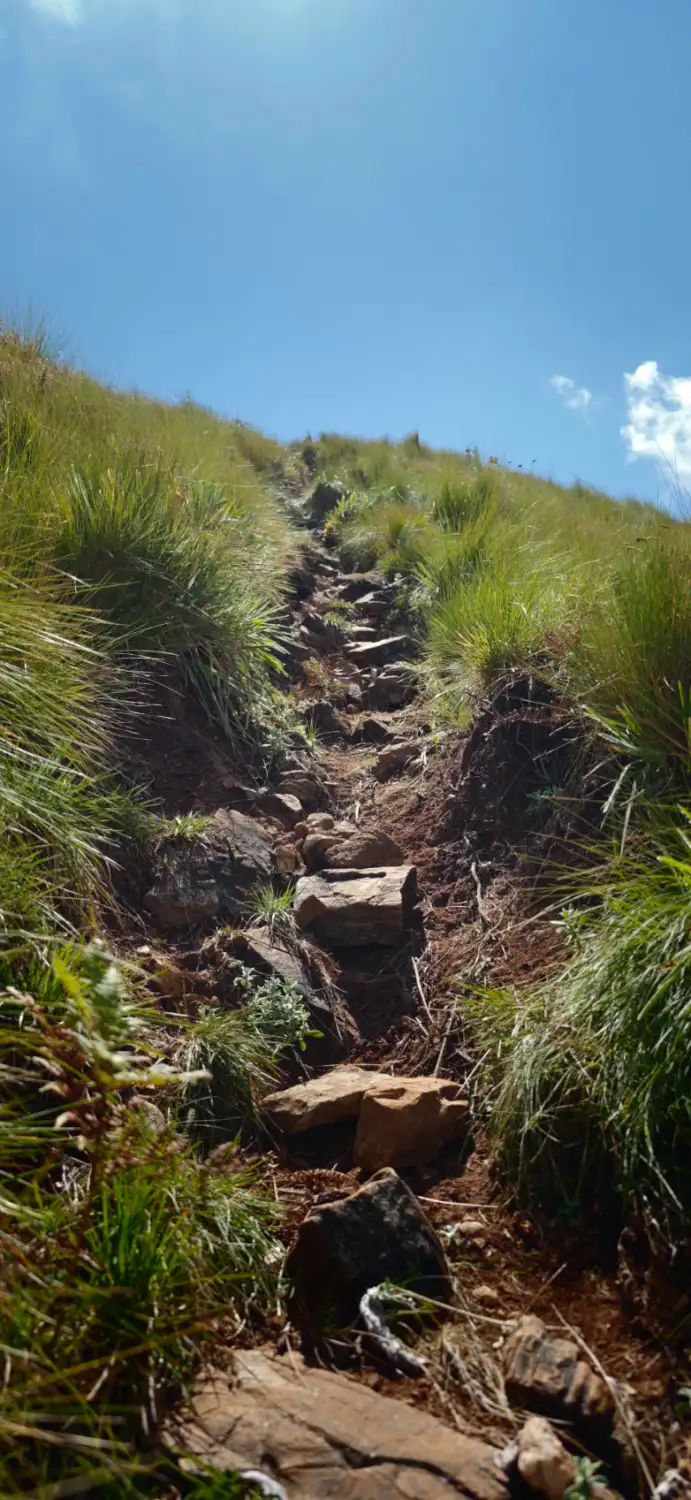
This Zimbabwe Highlands trek is one of our more rugged or 'wild' adventures. The terrain varies from hour to hour, from steep uphill ascents to scrambling over tree routes and large rocks. Some sections are wide open and exposed to the elements; others are boggy; and others are long stretches through gorgeous (but seemingly never-ending) forest, requiring a lot of concentration when placing your feet. The steep descents can be tough on the knees and ankles - we strongly recommend that you use at least one walking pole to help with balance and to take some pressure off your joints.
We camp each night in wild locations, near water, but without showers or toilets - something you may not be accustomed to if you've traveled with Tribal Tracks before! The food is plentiful but basic for breakfast and lunch, and dinner is a more substantial, tasty meal.
The conditions will require stamina and strength, which you should recognise and train for. This will be a much better experience if you are fit and prepared. You should feel comfortable walking 6-9 hours per day, carrying a day sack with all the essentials (2kg of water, suncream, waterproofs, lip balm, snacks, etc.).
Trip Details
If you want to extend your stay in Zimbabwe, please let us know and we would be happy to tailor make an itinerary for you.
Have a question? Get in touch, our small team will be delighted to help.